-
Shop
- Advanced Technologies
- Arts, Crafts & Hobbies
- Bathroom
- Best Sellers
- Car Accessories
- Dating & Social Skills
- Digital Resources
- Beauty
- Electronics & Technology
- Emotional Intelligence
- Home Styling & Organization
- Mindfulness
- Nutrition & Healthy Eating
- Personal Style & Fashion
- Pet Lifestyle & Wellness
- Positive Thinking
- Productivity
- Self Confidence
- Sleep Improvement
- Stress Management & Relaxation
- TikTok Growth & Monetization Mastery
- Travel & Adventure
- Yoga & Mind-Body Practices
- Education & Learning
- Family & Parenting
- Fashion
- Alexander McQueen
- Bags
- Bags & Wallets
- Balenciaga
- Belts
- Blazers
- Bottega Veneta
- Brunello Cucinelli
- Burberry
- Chanel
- Chloé
- Dior
- Dolce & Gabbana
- Dresses
- Etro
- Fendi
- Gucci
- Hats & Hair Accessories
- Jacquemus
- Jewelry
- Jil Sander
- Jimmy Choo
- Kiton
- Luggage
- Miu Miu
- Off-White
- Outerwear
- Prada
- Rick Owens
- Saint Laurent
- Socks & Tights
- Sunglasses
- The Row
- Tom Ford
- Valentino
- Valentino Garavani
- Versace
- Vivienne Westwood
- Watches
- Fashion Accessories
- Furniture
- Gadgets
- Health & Beauty
- Health & Wellness
- Home & Garden
- Home Electronics
- Home Supplies
- Kids & Babies
- Kitchen
- Lighting
- Mindset
- Patio, Lawn & Garden
- Personal Growth
- Pet Care
- Pet Supplies
- Pets
- Shoes
- Sport & Outdoors
- Super Deals
- Travel
- Wealth
- Wealth Building
- Budgeting & Saving
- Cryptocurrency Investing
- Debt Management
- Entrepreneurship & Business Growth
- Family Finance & Budgeting
- Financial Independence
- Financial Mindset & Psychology
- Financial Planning
- Frugal Living & Expense Hacks
- Goal Setting
- High-Income Skills
- Investing Basics
- Leadership
- Motivation
- Networking & Mentorship
- Passive Income Strategies
- Real Estate Investing
- Side Hustles
- Stock Market Investing
- Winter Fashion
- YouTube Shorts Best-Sellers
230W Electric Chainsaw Sharpener: Adjustable-Angle Grinder
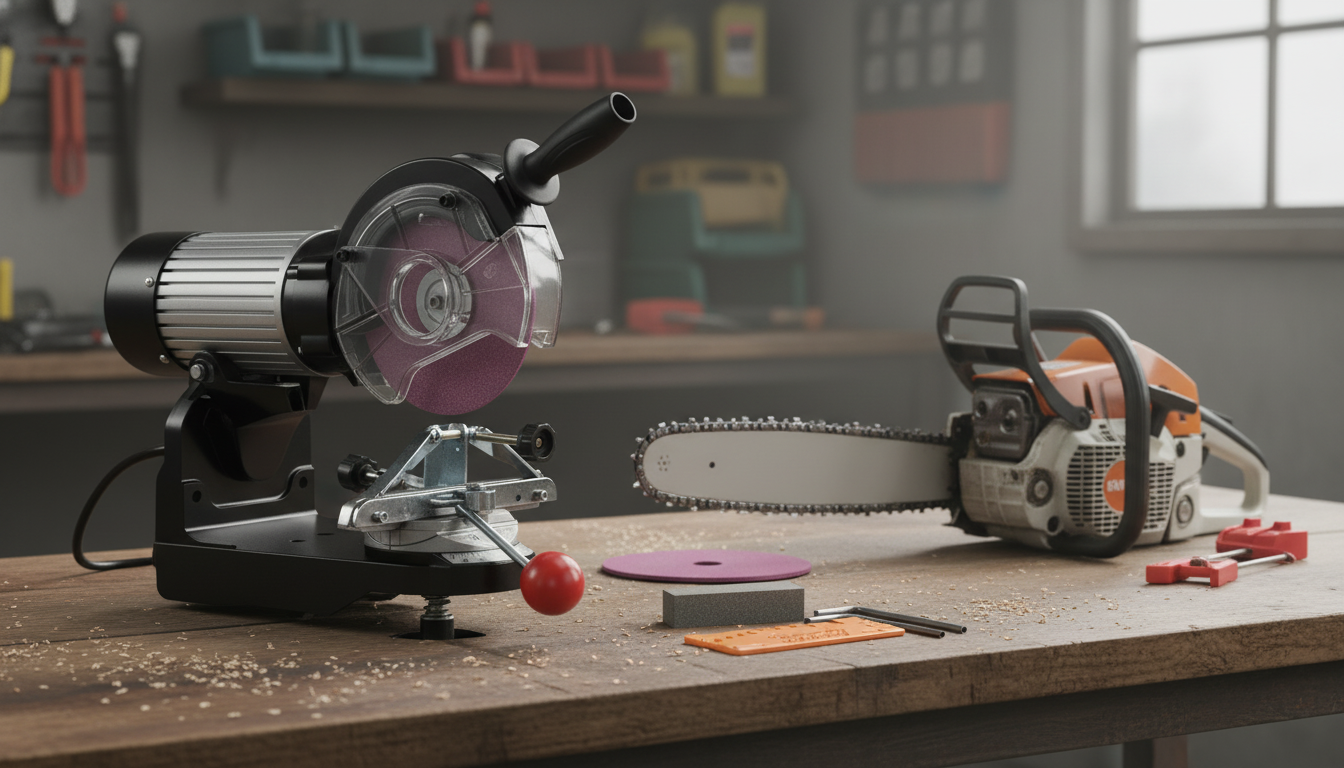
Electric Chainsaw Sharpener: 230W Chain Grinder with Adjustable Angles
A sharp chain cuts faster, tracks straighter, and reduces strain on the saw and operator. An electric sharpener with an adjustable-angle chain grinder helps keep cutter geometry consistent across all teeth, especially after hitting dirt or rocks. This guide covers what adjustable angles change, how a 230W bench-style grinder fits into maintenance routines, and how to sharpen safely with repeatable results. For more guidance, see [PDF] 1975 Special Chain Saw Section.
What an adjustable-angle chain grinder changes
Adjustable angles aren’t just a convenience feature—they’re the difference between “sharp enough” and a chain that cuts predictably across a full tank of fuel. By matching the top-plate filing angle to common chain specs, each cutter can be ground to the same geometry, tooth-to-tooth, instead of drifting as fatigue sets in. For further reading, see Chainsaw sharpening with Harbor Freight electric sharpener.
- Helps match the top-plate filing angle to common chain specs so cutters stay consistent tooth-to-tooth.
- Allows switching between different chain types and cutting preferences (faster crosscut vs. smoother control) without guesswork.
- Supports more repeatable sharpening than hand files when multiple chains are maintained.
- Reduces the risk of uneven cutter length that can cause the saw to pull to one side.
Quick specs and what they mean for real use
A bench grinder style sharpener is built for routine maintenance sessions: you bring the chain to the tool, set your angles once, then work through the cutters with consistent pressure and stop settings. A 230W motor is aimed at maintaining steady wheel speed so the grind feels uniform from the first tooth to the last.
- 230W motor: intended to maintain grinding speed under load for consistent material removal.
- Bench-style grinder format: designed for workshop/garage sharpening sessions rather than in-the-field touch-ups.
- Adjustable angles: useful for dialing in the cutter geometry and repeating settings for the next chain.
- Best suited for: homeowners with multiple chains, small property maintenance, and frequent firewood cutting schedules.
At-a-glance features
| Feature | Why it matters |
|---|---|
| 230W motor | Helps keep the wheel cutting steadily so each tooth can be ground to a similar finish |
| Adjustable sharpening angles | Makes it easier to align with common chain angle requirements and repeat settings |
| Electric grinding wheel | Removes damaged metal faster than hand filing when cutters are dull or chipped |
| Bench-style setup | Stability improves consistency and reduces fatigue during multi-chain sharpening |
Before sharpening: chain inspection and setup
Better results start before the wheel ever touches a cutter. A few minutes of prep reduces heat, prevents uneven tooth length, and keeps the grinder from fighting built-up resin.
- Clean the chain: remove resin and debris so the wheel contacts metal evenly; a dirty chain can load the wheel and overheat cutters.
- Check for damaged teeth: cracked cutters, missing chunks, or bent links should be replaced rather than ground aggressively.
- Identify the shortest cutter: use it as the reference tooth; match all other cutters to that length for balanced cutting.
- Confirm chain pitch/size compatibility: ensure the sharpener’s clamp range and wheel setup fit before starting.
- Mark the starting cutter: use a paint pen or marker to avoid double-grinding.
For general technique references and safety reminders, manufacturers often publish chain-specific sharpening basics; see resources from STIHL and maintenance guidance from Oregon Products.
Sharpening workflow for consistent results
Consistency is the goal: same angle, same tooth length, and minimal heat. Think in brief, repeatable touches rather than long grinds.
- Set the chain in the clamp so the cutter is supported and the stop is positioned for repeatable tooth length.
- Adjust the head angle for the first side of cutters and lock it in before grinding.
- Use light, controlled passes: brief touches reduce heat buildup and preserve cutter temper.
- Grind every other tooth on the first pass (all cutters facing the same direction), then reset for the opposite side.
- Maintain equal pressure and time per tooth to keep cutter lengths uniform.
- After grinding, lightly deburr if needed so the edge is clean and consistent.
If you notice any tooth turning blue or straw-colored, that’s a warning sign of overheating. Pause and let the metal cool, then continue with shorter, lighter touches.
Depth gauges (rakers): the step that affects bite and speed
A chain can feel “sharp” to the touch and still cut slowly if depth gauges are too high. As cutters get shortened over multiple sharpenings, the depth gauges may need to be lowered to maintain proper chip thickness.
Common mistakes and how to avoid them
Who this sharpener fits best
Product options in stock
- Electric Chainsaw Sharpener – 230W Chain Grinder with Adjustable Angles ($183.00): a bench-style electric grinder designed for repeatable sharpening with adjustable settings when consistent cutter geometry is a priority.
- How To Relax Your Body And Live With Less Stress ($37.59): a practical pick for building calmer routines—useful for anyone doing detailed shop tasks where patience and focus matter.
FAQ
What angles should a chainsaw chain be sharpened at?
Angles vary by chain model and purpose. Reference the chain manufacturer’s specifications for top-plate angle and grinder head settings, then keep the setting consistent for all teeth on each side.
Can an electric chain grinder ruin a chain?
Yes. Overheating cutters, removing too much metal, or creating uneven tooth lengths can shorten chain life and reduce cutting performance; use light passes, consistent stops, and avoid prolonged grinding that discolors the metal.
Do depth gauges need adjustment after sharpening?
Often, yes. As cutters get shorter, depth gauges may need to be lowered to maintain proper bite; use a depth gauge tool and remove small amounts to stay within safe limits.
Recommended for you



Was this article helpful?
Yes
No










Leave a comment