-
Shop
- Advanced Technologies
- Arts, Crafts & Hobbies
- Bathroom
- Best Sellers
- Car Accessories
- Dating & Social Skills
- Digital Resources
- Beauty
- Electronics & Technology
- Emotional Intelligence
- Home Styling & Organization
- Mindfulness
- Nutrition & Healthy Eating
- Personal Style & Fashion
- Pet Lifestyle & Wellness
- Positive Thinking
- Productivity
- Self Confidence
- Sleep Improvement
- Stress Management & Relaxation
- TikTok Growth & Monetization Mastery
- Travel & Adventure
- Yoga & Mind-Body Practices
- Education & Learning
- Family & Parenting
- Fashion
- Alexander McQueen
- Bags
- Bags & Wallets
- Balenciaga
- Belts
- Blazers
- Bottega Veneta
- Brunello Cucinelli
- Burberry
- Chanel
- Chloé
- Dior
- Dolce & Gabbana
- Dresses
- Etro
- Fendi
- Gucci
- Hats & Hair Accessories
- Jacquemus
- Jewelry
- Jil Sander
- Jimmy Choo
- Kiton
- Luggage
- Miu Miu
- Off-White
- Outerwear
- Prada
- Rick Owens
- Saint Laurent
- Socks & Tights
- Sunglasses
- The Row
- Tom Ford
- Valentino
- Valentino Garavani
- Versace
- Vivienne Westwood
- Watches
- Fashion Accessories
- Furniture
- Gadgets
- Health & Beauty
- Health & Wellness
- Home & Garden
- Home Electronics
- Home Supplies
- Kids & Babies
- Kitchen
- Lighting
- Mindset
- Patio, Lawn & Garden
- Personal Growth
- Pet Care
- Pet Supplies
- Pets
- Shoes
- Sport & Outdoors
- Super Deals
- Travel
- Wealth
- Wealth Building
- Budgeting & Saving
- Cryptocurrency Investing
- Debt Management
- Entrepreneurship & Business Growth
- Family Finance & Budgeting
- Financial Independence
- Financial Mindset & Psychology
- Financial Planning
- Frugal Living & Expense Hacks
- Goal Setting
- High-Income Skills
- Investing Basics
- Leadership
- Motivation
- Networking & Mentorship
- Passive Income Strategies
- Real Estate Investing
- Side Hustles
- Stock Market Investing
- Winter Fashion
- YouTube Shorts Best-Sellers
Montessori Wooden Shape Matching & Lacing Puzzle for Kids
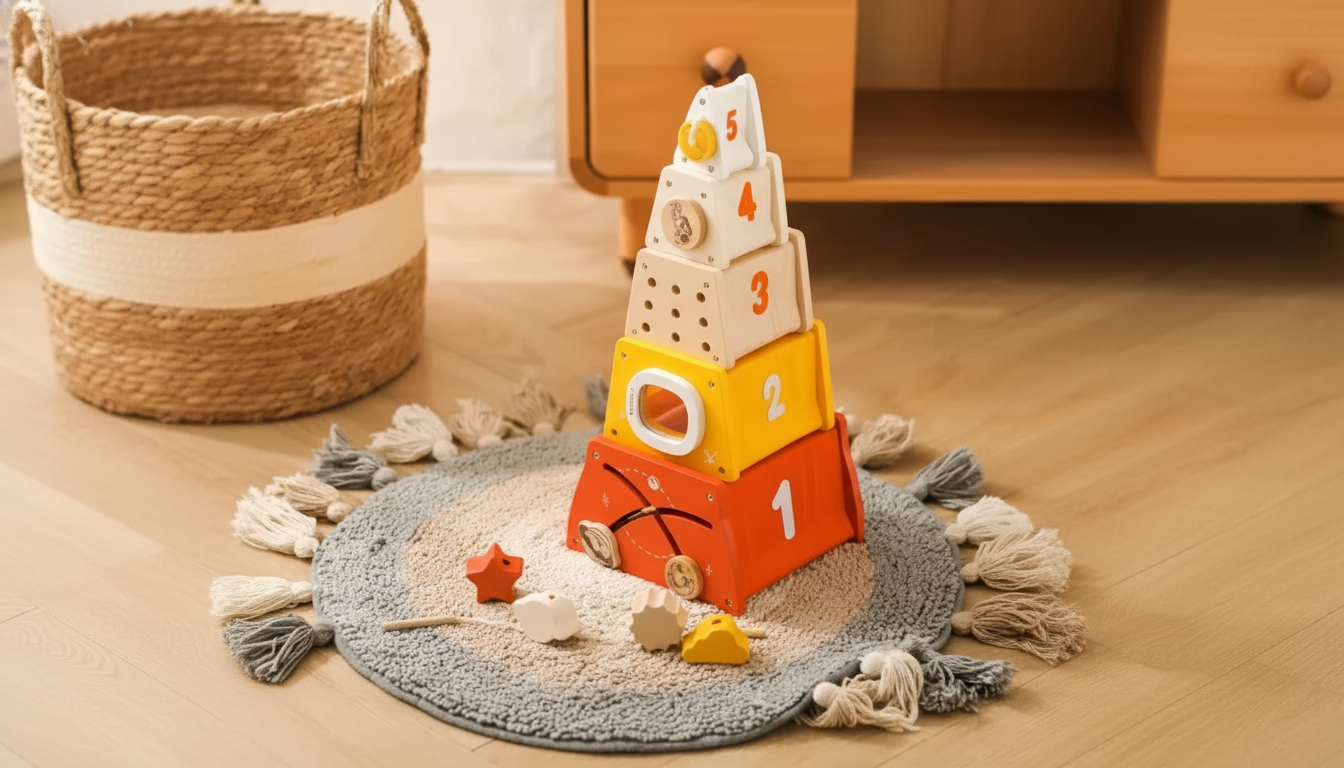
Kids Wooden Montessori Shape Matching Threading Puzzle Toy: Hands-On Learning Through Play
A wooden shape matching and threading puzzle combines sorting, lacing, and problem-solving in one tactile activity. Montessori-inspired toys like this invite kids to learn with their hands—building steady focus, early geometry awareness, and fine-motor control through calm, repeatable play. It also fits easily into short daily practice windows, whether you’re setting up a quiet corner at home or a classroom learning station. For more guidance, see Storyboard Set in Felt by Fun & Function.
What This Toy Helps Kids Practice
A shape matching threading puzzle looks simple, but it supports several foundational skills that show up later in writing, math, and everyday independence. For further reading, see What Are the Benefits of Montessori Toys for Child Development?.
- Fine-motor control: pinching, grasping, and stabilizing pieces while guiding the lace
- Hand-eye coordination: aligning holes and threading with controlled movement
- Shape and color recognition: noticing edges, corners, curves, and silhouettes
- Early math thinking: sorting, matching, sequencing, and basic pattern-building
- Attention and persistence: finishing a set encourages sticking with a task until it’s complete
These are the kinds of skills often highlighted in developmentally appropriate early learning, where hands-on materials help children practice concepts in a concrete way. For a helpful overview of this approach, see NAEYC’s guidance on Developmentally Appropriate Practice (DAP).
How to Play (Simple Progression That Grows With Them)
One of the best parts of a matching-and-lacing puzzle is that it can “level up” as your child’s confidence grows. Try this progression and repeat steps as needed—repetition is where the learning sticks.
- Start with matching only: place shapes into their correct spots without threading.
- Introduce threading with fewer pieces: choose 2–3 shapes and demonstrate slow, deliberate lacing.
- Add a pattern challenge: “thread circle, square, circle” or “two warm colors, one cool color.”
- Turn it into a naming game: say the shape name and a descriptive word (e.g., “big triangle,” “red circle”).
- End with a tidy-up routine: invite kids to return shapes to their places to reinforce order.
If your child gets stuck, try pausing instead of jumping in immediately. A short wait often gives them space to try a new grip or angle—exactly the kind of problem-solving the activity is meant to encourage.
Age Guidance and Safety Notes
Children develop fine-motor skills at different speeds, so consider age as a starting point rather than a strict rule.
- Toddlers (about 2–3): focus on matching and short threading sessions with supervision.
- Preschool (about 3–5): longer independent play; introduce patterns and “find and thread” challenges.
- Check craftsmanship: smooth edges and well-finished holes help reduce snagging and splinters.
- Lace safety: if the set includes a longer lace, use supervised play and store the string separately when not in use.
- Verify materials/finishes: confirm the toy meets local safety expectations for your child’s age group.
For general toy safety guidance (including age considerations and supervision reminders), reference the American Academy of Pediatrics tips on choosing safe toys for young children. You can also compare your child’s emerging skills with general early childhood milestones (for example, the CDC’s overview of milestones by age 3).
Montessori-Friendly Setup at Home
A simple, consistent setup makes it more likely kids will choose the activity independently—and put it back when they’re done.
- Keep it visible and reachable: place the puzzle on a low shelf with the lace coiled neatly beside it.
- Offer one activity at a time: fewer choices often leads to deeper focus.
- Define the workspace: use a small mat or tray to keep pieces contained.
- Demonstrate slowly once: then allow repetition without frequent correction.
- Rotate similar activities: alternate between stacking, sorting, and lacing week to week to renew interest.
For many families, this becomes a reliable “quiet work” option—especially helpful during transitions like pre-dinner time or a calm morning routine.
Quick Feature Checklist
At-a-Glance Overview
| Feature | Why it matters | Simple way to use it |
|---|---|---|
| Shape matching | Builds visual discrimination and classification | Ask the child to find “all triangles” first, then match |
| Threading/lacing | Strengthens fine-motor and coordination skills | Thread one piece at a time, pause, then continue |
| Patterns & sequencing | Supports early math thinking | Create a repeating pattern for the child to copy |
| Independent play | Encourages concentration and confidence | Set it on a shelf and let the child choose it freely |
When This Toy Is a Great Gift
Product Options (In Stock)
- Kids Wooden Montessori Shape Matching Threading Puzzle Toy — wooden matching and lacing practice. $114.91 USD, in stock.
- How To Relax Your Body And Live With Less Stress — a helpful companion for building calmer daily routines while kids practice quiet play. $37.59 USD, in stock.
- Checklist: Bright Mind Boost — Your Simple Daily Guide to Staying Positive | Digital Download for How to Keep Positive Thoughts — a quick, practical guide for simple daily mindset habits. $30.97 USD, in stock.
FAQ
What skills does a shape matching threading puzzle build?
It builds fine-motor strength, hand-eye coordination, and shape/color recognition while also supporting sequencing, simple patterns, attention, and early problem-solving through repeated hands-on practice.
What age is a wooden threading puzzle best for?
Many kids enjoy it from toddler to preschool ages (roughly 2–5), starting with matching-only and progressing to threading and pattern challenges. Younger toddlers typically do best with short, supervised sessions.
How long should a child play with a threading puzzle at a time?
Ten to twenty minutes is a solid goal, depending on interest and energy. Ending before frustration and returning to it regularly helps keep the activity positive and effective.
Recommended for you


Was this article helpful?
Yes
No









Leave a comment