-
Shop
- Advanced Technologies
- Arts, Crafts & Hobbies
- Bathroom
- Best Sellers
- Car Accessories
- Dating & Social Skills
- Digital Resources
- Beauty
- Electronics & Technology
- Emotional Intelligence
- Home Styling & Organization
- Mindfulness
- Nutrition & Healthy Eating
- Personal Style & Fashion
- Pet Lifestyle & Wellness
- Positive Thinking
- Productivity
- Self Confidence
- Sleep Improvement
- Stress Management & Relaxation
- TikTok Growth & Monetization Mastery
- Travel & Adventure
- Yoga & Mind-Body Practices
- Education & Learning
- Family & Parenting
- Fashion
- Alexander McQueen
- Bags
- Bags & Wallets
- Balenciaga
- Belts
- Blazers
- Bottega Veneta
- Brunello Cucinelli
- Burberry
- Chanel
- Chloé
- Dior
- Dolce & Gabbana
- Dresses
- Etro
- Fendi
- Gucci
- Hats & Hair Accessories
- Jacquemus
- Jewelry
- Jil Sander
- Jimmy Choo
- Kiton
- Luggage
- Miu Miu
- Off-White
- Outerwear
- Prada
- Rick Owens
- Saint Laurent
- Socks & Tights
- Sunglasses
- The Row
- Tom Ford
- Valentino
- Valentino Garavani
- Versace
- Vivienne Westwood
- Watches
- Fashion Accessories
- Furniture
- Gadgets
- Health & Beauty
- Health & Wellness
- Home & Garden
- Home Electronics
- Home Supplies
- Kids & Babies
- Kitchen
- Lighting
- Mindset
- Patio, Lawn & Garden
- Personal Growth
- Pet Care
- Pet Supplies
- Pets
- Shoes
- Sport & Outdoors
- Super Deals
- Travel
- Wealth
- Wealth Building
- Budgeting & Saving
- Cryptocurrency Investing
- Debt Management
- Entrepreneurship & Business Growth
- Family Finance & Budgeting
- Financial Independence
- Financial Mindset & Psychology
- Financial Planning
- Frugal Living & Expense Hacks
- Goal Setting
- High-Income Skills
- Investing Basics
- Leadership
- Motivation
- Networking & Mentorship
- Passive Income Strategies
- Real Estate Investing
- Side Hustles
- Stock Market Investing
- Winter Fashion
- YouTube Shorts Best-Sellers
Amphibious 3-Channel RC Plane: Water & Land Flying Guide
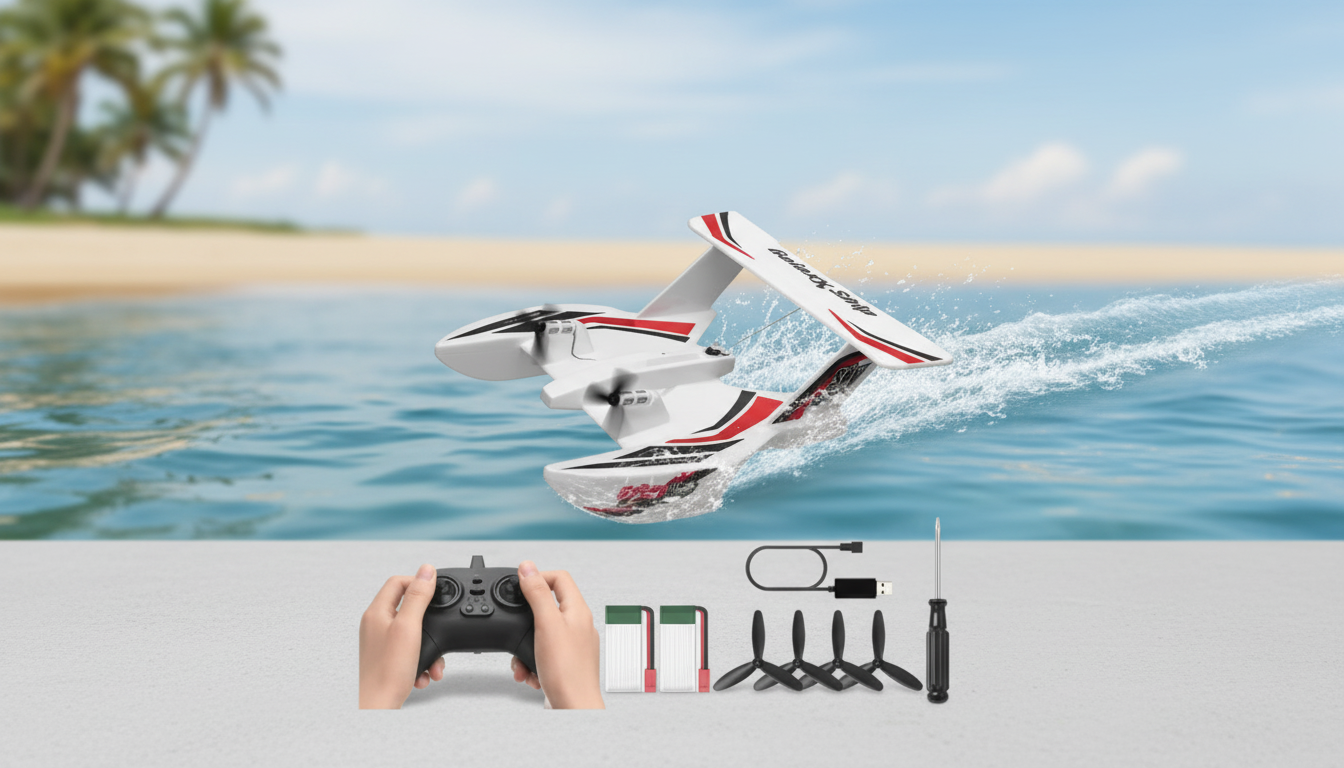
Amphibious 3-Channel RC Plane
An amphibious RC plane adds a new layer of fun by taking off from calm water or smooth ground, then returning for a splashdown landing. This guide breaks down what 3-channel control means, how amphibious takeoffs and landings work, and what to check before the first run so the experience stays smooth and reliable.
What Makes an Amphibious RC Plane Different
Unlike a typical park flyer that needs wheels or hand-launching, an amphibious RC plane is designed to operate from both water and land. The key difference is the hull-style body: it rides on the surface like a tiny boat during taxi and takeoff, then transitions cleanly into flight. That hull is paired with a stable airframe profile that helps the model track straight and stay predictable when wind or water texture changes.
Water operations also demand a little more attention to balance and throttle management. Too much throttle too quickly can make a lightweight model skip, bounce, or “porpoise” (repeatedly pitching up and down) as it tries to climb on plane. Too little throttle can leave it plowing and unable to build enough speed to lift off. Most pilots get the best results on calm lakes, ponds, or slow-moving water with minimal wind and room to approach from a long, straight line.
A hull that rides on the surface reduces the need for separate pontoons, which can simplify handling and reduce drag. That said, the hull still needs a clean, smooth run: weeds, floating debris, and choppy water can quickly turn an easy takeoff into a stuck taxi or an unexpected pivot.
How 3-Channel Control Feels in the Air
Three channels commonly cover throttle plus two primary steering axes (often elevator and rudder). The big advantage is approachability: there’s less to coordinate, so it’s easier to focus on the essentials—keeping the wings stable, maintaining safe altitude, and controlling speed. Many 3-channel models are tuned for steady, confidence-building flight rather than snap rolls and aggressive aerobatics.
Smoother inputs matter more than aggressive maneuvers. On the water, gentle corrections help prevent oversteer and minimize the chance of the hull catching and yawing sharply. In the air, wide, gradual turns at a comfortable altitude reduce the chance of a sudden stall or a nose-down dive caused by overcorrecting.
A practical training pattern is: climb to a safe height, fly straight, then execute long, arcing turns while keeping throttle consistent. Once those turns feel automatic, transitions—like lining up for a water approach—become much easier.
Water Takeoff and Landing Basics
Start by choosing a sheltered spot. Small ripples are manageable, but chop can flip a lightweight model during the takeoff run or slap the hull so hard that it never builds smooth speed. Before committing to takeoff, do a short, straight taxi to confirm steering response and make sure the model tracks without hunting left and right.
For takeoff, increase throttle smoothly. The goal is to let the hull “plane” on the surface first—gliding up onto a faster, flatter ride—before the wings generate enough lift to climb out. If the plane starts bouncing, slightly reduce throttle and hold a steady heading until it settles, then try again with a more gradual power increase.
Land Operation Tips (Grass, Pavement, and Packed Dirt)
Quick Reference: What to Check Before Each Run
Quick checks prevent most first-day problems. Confirm the battery is secured, controls move in the correct direction, and the prop area is clear. For water runs, make sure access hatches are seated properly and that conditions are calm enough for a stable takeoff and approach. For general field safety guidance, refer to the Academy of Model Aeronautics Safety Handbook and the FAA Advisory Circular 91-57B.
| Check | Why it matters | What to do if it fails |
|---|---|---|
| Battery seated and secured | Prevents sudden trim changes and cutouts | Reposition and strap/lock it in place |
| Controls move correctly | Avoids immediate loss of control after launch | Rebind/recalibrate; do not launch until fixed |
| Prop area clear | Prevents prop damage and vibration | Remove debris; replace damaged prop if needed |
| Hatch/canopy sealed (water runs) | Reduces water intrusion risk | Reseat and dry; postpone water run if seal is poor |
| Calm water / safe wind | Improves takeoff and landing success | Move location or wait for calmer conditions |
Getting Started: Setup and First Successful Flight
Care After Water Use
Who This Style of Plane Suits Best
Common Issues and Simple Fixes
Product Option
If you want a ready-to-buy option built around an amphibious design and a 3-channel control setup, see the Amphibious 3-Channel RC Plane. Use the product page to confirm current price, stock status, and what’s included before ordering.
For lake-day logistics and carrying essentials hands-free, the Dog Backpack Vest with Leash Buckle can be a practical add-on for anyone bringing a pet along to an open flying spot.
And for downtime while batteries recharge, How To Relax Your Body And Live With Less Stress is a simple, low-effort companion read that pairs well with the slower rhythm of outdoor hobby sessions.
FAQ
Can an amphibious RC plane take off from any body of water?
Calm, open water is best. Avoid waves, heavy wind, fast currents, weeds, and crowded areas, and always have a safe retrieval plan before launching.
Is 3-channel control suitable for beginners?
Yes—fewer channels are generally easier to learn. Practice gentle turns, smooth throttle changes, and land-based checks first, then add water sessions once basic handling feels consistent.
What should be done if the plane gets water inside?
Power off immediately, remove the battery, and dry everything thoroughly before charging or storing. Inspect connectors and electronics for moisture or corrosion and don’t reuse the model until it’s fully dry.
Recommended for you
Was this article helpful?
Yes
No









Leave a comment