-
Shop
- Advanced Technologies
- Arts, Crafts & Hobbies
- Bathroom
- Best Sellers
- Car Accessories
- Dating & Social Skills
- Digital Resources
- Beauty
- Electronics & Technology
- Emotional Intelligence
- Home Styling & Organization
- Mindfulness
- Nutrition & Healthy Eating
- Personal Style & Fashion
- Pet Lifestyle & Wellness
- Positive Thinking
- Productivity
- Self Confidence
- Sleep Improvement
- Stress Management & Relaxation
- TikTok Growth & Monetization Mastery
- Travel & Adventure
- Yoga & Mind-Body Practices
- Education & Learning
- Family & Parenting
- Fashion
- Alexander McQueen
- Bags
- Bags & Wallets
- Balenciaga
- Belts
- Blazers
- Bottega Veneta
- Brunello Cucinelli
- Burberry
- Chanel
- Chloé
- Dior
- Dolce & Gabbana
- Dresses
- Etro
- Fendi
- Gucci
- Hats & Hair Accessories
- Jacquemus
- Jewelry
- Jil Sander
- Jimmy Choo
- Kiton
- Luggage
- Miu Miu
- Off-White
- Outerwear
- Prada
- Rick Owens
- Saint Laurent
- Socks & Tights
- Sunglasses
- The Row
- Tom Ford
- Valentino
- Valentino Garavani
- Versace
- Vivienne Westwood
- Watches
- Fashion Accessories
- Furniture
- Gadgets
- Health & Beauty
- Health & Wellness
- Home & Garden
- Home Electronics
- Home Supplies
- Kids & Babies
- Kitchen
- Lighting
- Mindset
- Patio, Lawn & Garden
- Personal Growth
- Pet Care
- Pet Supplies
- Pets
- Shoes
- Sport & Outdoors
- Super Deals
- Travel
- Wealth
- Wealth Building
- Budgeting & Saving
- Cryptocurrency Investing
- Debt Management
- Entrepreneurship & Business Growth
- Family Finance & Budgeting
- Financial Independence
- Financial Mindset & Psychology
- Financial Planning
- Frugal Living & Expense Hacks
- Goal Setting
- High-Income Skills
- Investing Basics
- Leadership
- Motivation
- Networking & Mentorship
- Passive Income Strategies
- Real Estate Investing
- Side Hustles
- Stock Market Investing
- Winter Fashion
- YouTube Shorts Best-Sellers
Dream to DONE: A Goal-Setting Checklist That Works
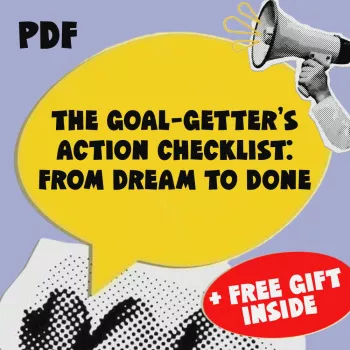
The Goal-Getter’s Action Checklist: From Dream to DONE
Big goals often stall for one simple reason: the next action is unclear. A goal-setting checklist turns an exciting idea into a repeatable process—clarify what matters, define success, choose the next step, and track momentum. Below is a practical, printable-style workflow for converting “someday” into scheduled actions, with built-in prompts for priorities, obstacles, and progress reviews. If you like having a ready-made sheet to keep on your desk, the The Goal-Getter’s Action Checklist: From Dream to DONE is designed for exactly this kind of follow-through.
What “Dream to DONE” looks like in real life
“Dream to DONE” isn’t about trying harder—it’s about making progress unavoidable by turning ambition into visible, finishable steps.
- Start with a clear outcome: name the result, not the activity (example: “submit the application” vs. “work on my career”).
- Define the finish line: specify what “done” means with proof you can point to (a date, a submitted file, a completed payment, a delivered project).
- Break the goal into a path: translate one big outcome into milestones that can be completed in one sitting.
- Replace motivation with structure: rely on scheduled steps, reminders, and simple tracking rather than waiting to feel ready.
That structure matters because goal success improves when goals are specific and paired with clear planning. For a science-backed overview, see the American Psychological Association’s guide to goal setting.
Set the goal so it can be acted on
If a goal can’t be measured or proven, it’s easy to “work on it” for weeks without actually finishing. Use a one-sentence statement, pick metrics, and define constraints before you build the task list.
- Write a one-sentence goal statement: “By [date], [result] measured by [metric or proof].”
- Choose one primary metric and one support metric: primary = output; support = effort (example: primary = “pages drafted”; support = “hours in deep work”).
- List the “why” in one line: a short purpose makes tradeoffs easier when your schedule gets tight.
- Identify constraints up front: time, budget, tools, approvals—so the plan matches reality.
- Decide the minimum viable version: the smallest acceptable completion if conditions change.
Action-ready goal setup
| Element | Prompt | Example |
|---|---|---|
| Outcome | What will be true when it’s done? | A 10-page portfolio PDF is finalized |
| Proof | What shows completion unmistakably? | File exported and sent to recruiter |
| Deadline | When does “done” need to happen? | By Sept 30 |
| Metric | What gets tracked weekly? | 2 pages drafted per week |
| Minimum version | What is the smallest acceptable finish? | 5 pages with 3 projects |
Turn the goal into a checklist of next actions
A strong checklist is not a “to-do list of hopes.” It’s a sequence of actions you can start without debate.
- Brain-dump all tasks: capture everything that needs to happen without organizing yet.
- Group tasks into phases: research, preparation, execution, review, finalize.
- Convert tasks into session-sized actions: start with a verb and aim for 15–90 minutes (example: “outline section 2,” not “work on outline”).
- Identify the first domino: the smallest step that makes progress inevitable (example: “open template and name the file”).
- Set dependencies: note what must happen first to avoid stalled work.
- Add time and difficulty estimates: so you can build a week that fits real life.
One useful way to sharpen “next actions” is to use if–then planning (implementation intentions), which has strong research support for increasing follow-through. An overview is available via APA PsycNet: Implementation Intentions and Goal Achievement.
Plan the week: schedule actions, not intentions
Weekly planning works best when it produces calendar blocks and clear starts—rather than vague promises. A simple rule: if it matters, it gets a time slot.
For days when stress makes planning feel heavier, pairing your goal checklist with a calming routine can help you start. Consider keeping a separate support resource like How To Relax Your Body And Live With Less Stress alongside your weekly plan.
Handle common obstacles before they derail momentum
When mindset is the main blocker, a small daily positivity checklist can keep momentum from fading between work sessions. The Checklist: Bright Mind Boost — Your Simple Daily Guide to Staying Positive can work as a quick companion to your goal plan.
Track progress and keep the plan honest
Weekly review snapshot
| Check-in | Question | What to write |
|---|---|---|
| Progress | What moved forward? | Completed 3 action steps; drafted 2 pages |
| Blockers | What got in the way? | Waiting on feedback; underestimated design time |
| Adjustments | What changes next week? | Schedule design block earlier; reduce task size |
| Next actions | What happens first Monday? | Open template; draft project summary #3 |
Using a printable checklist to make follow-through automatic
If you want a ready-to-use layout you can print, reuse, and keep consistent across goals, The Goal-Getter’s Action Checklist: From Dream to DONE is built around this exact workflow—outcome, proof, next actions, weekly review, and closeout.
FAQ
How many goals should be worked on at the same time?
Keep 1 primary goal active, plus 1–2 supporting goals at most. Too many simultaneous goals dilute time blocks and increase decision fatigue; rotating priorities by month or quarter keeps completion rates higher.
What if the deadline changes halfway through?
Revisit the finish line and update milestones, then recalculate weekly actions based on the new date. Even if the deadline moves, keep the next action specific and measurable so progress stays concrete.
How can progress be tracked without overcomplicating it?
Track one primary metric, do a short weekly review, and tally completed actions. Consistency beats detailed logging—for example, “2 pages drafted” plus “3 sessions completed” is enough to guide next week’s plan.
Recommended for you


Was this article helpful?
Yes
No








Leave a comment