-
Shop
- Advanced Technologies
- Arts, Crafts & Hobbies
- Bathroom
- Best Sellers
- Car Accessories
- Dating & Social Skills
- Digital Resources
- Beauty
- Electronics & Technology
- Emotional Intelligence
- Home Styling & Organization
- Mindfulness
- Nutrition & Healthy Eating
- Personal Style & Fashion
- Pet Lifestyle & Wellness
- Positive Thinking
- Productivity
- Self Confidence
- Sleep Improvement
- Stress Management & Relaxation
- TikTok Growth & Monetization Mastery
- Travel & Adventure
- Yoga & Mind-Body Practices
- Education & Learning
- Family & Parenting
- Fashion
- Alexander McQueen
- Bags
- Bags & Wallets
- Balenciaga
- Belts
- Blazers
- Bottega Veneta
- Brunello Cucinelli
- Burberry
- Chanel
- Chloé
- Dior
- Dolce & Gabbana
- Dresses
- Etro
- Fendi
- Gucci
- Hats & Hair Accessories
- Jacquemus
- Jewelry
- Jil Sander
- Jimmy Choo
- Kiton
- Luggage
- Miu Miu
- Off-White
- Outerwear
- Prada
- Rick Owens
- Saint Laurent
- Socks & Tights
- Sunglasses
- The Row
- Tom Ford
- Valentino
- Valentino Garavani
- Versace
- Vivienne Westwood
- Watches
- Fashion Accessories
- Furniture
- Gadgets
- Health & Beauty
- Health & Wellness
- Home & Garden
- Home Electronics
- Home Supplies
- Kids & Babies
- Kitchen
- Lighting
- Mindset
- Patio, Lawn & Garden
- Personal Growth
- Pet Care
- Pet Supplies
- Pets
- Shoes
- Sport & Outdoors
- Super Deals
- Travel
- Wealth
- Wealth Building
- Budgeting & Saving
- Cryptocurrency Investing
- Debt Management
- Entrepreneurship & Business Growth
- Family Finance & Budgeting
- Financial Independence
- Financial Mindset & Psychology
- Financial Planning
- Frugal Living & Expense Hacks
- Goal Setting
- High-Income Skills
- Investing Basics
- Leadership
- Motivation
- Networking & Mentorship
- Passive Income Strategies
- Real Estate Investing
- Side Hustles
- Stock Market Investing
- Winter Fashion
- YouTube Shorts Best-Sellers
Sports Confidence: Reset Fast, Stay Calm Under Pressure
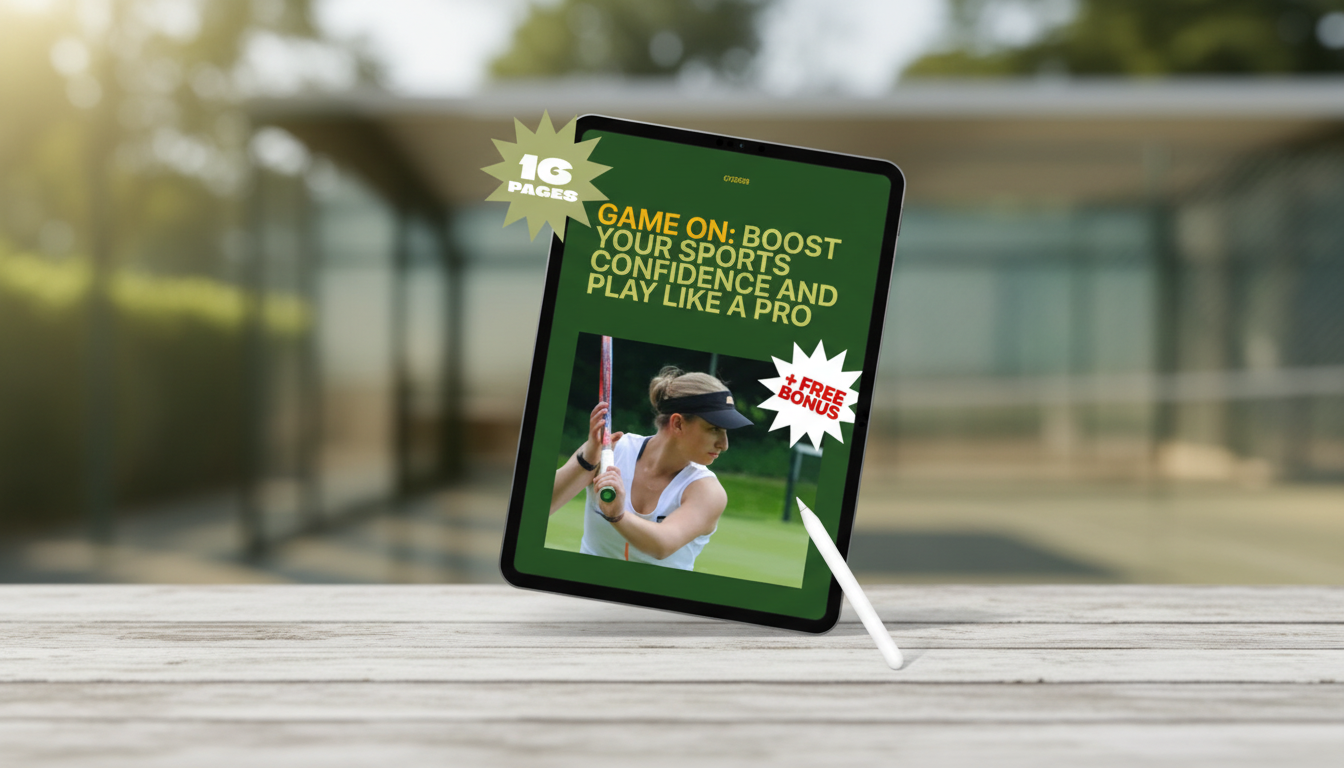
Game On: Build Sports Confidence and Play Like a Pro
Sports confidence isn’t something athletes either “have” or “don’t have.” It’s a set of trainable skills: how to respond to mistakes, how to reset under pressure, and how to trust preparation when the moment gets loud. When confidence is built on habits (not moods), performance becomes steadier across practices, tryouts, and real competition.
Below are practical, repeatable tools—pre-performance routines, self-talk upgrades, focus cues, and bounce-back strategies—so you can compete with intent when the game speeds up.
What Sports Confidence Looks Like in Real Games
- Stays present after errors: a quick reset instead of replaying the mistake in your head.
- Competes with intent: makes decisive choices rather than “playing not to lose.”
- Keeps body language steady: posture, breathing, and tempo support composure.
- Uses pressure as information: notices nerves and converts them into action cues.
Notice how none of these rely on “feeling confident.” They rely on behaviors you can practice—especially your reset skills and your decision speed.
Why Confidence Drops (and How to Interrupt the Spiral)
- Outcome fixation: attention shifts to the scoreboard, selection, or approval. Replace it with controllables (effort, spacing, tempo, technique cue).
- Negative self-talk loops: identify recurring phrases and rewrite them into short, believable scripts you’ll actually use mid-play.
- Fear of making mistakes: reframe errors as feedback; define your “next best action” for common breakdowns.
- Comparison pressure: track personal performance indicators instead of chasing someone else’s strengths.
Quick confidence resets: problem → response
| In the moment | What it feels like | Reset move (10–30 seconds) |
|---|---|---|
| After a mistake | Heat in the face, rushing | Exhale longer than inhale, name the next task cue (e.g., “feet set”, “see the ball”) |
| Before a key play | Tight chest, doubt | One sentence plan + one physical trigger (tap wrist, adjust laces) |
| During a slump | Flat energy, avoidance | Increase controllable intensity for 2 possessions/points: sprint back, call communication cue |
| After criticism | Defensive, distracted | Convert to one actionable focus: “Earlier read”, “Higher elbow”, “First step” |
A Simple Athlete Mindset Framework: Control, Commit, Reset
- Control: choose one controllable target per segment (first 5 minutes, next set, next drive).
- Commit: act decisively with the chosen cue; hesitation is the biggest confidence tax.
- Reset: use a consistent post-action routine—good or bad—to stay stable.
This framework keeps your attention where performance lives: the next rep. If you’re stuck in “What if I fail?”, you’re usually missing either a controllable cue or a commit trigger.
Build a Pre-Performance Routine That Travels
- Keep it short: 3–5 minutes that can be repeated in any venue.
- Sequence: body (breathing/warm-up cue) → mind (one phrase plan) → eyes (visualize first actions).
- Use a single “go” trigger: clap, bounce, breath, or word that starts competitive mode.
- Practice it in training: so it’s automatic on game day.
A simple example: 3 long exhales (body), one line like “Win the first step, stay low” (mind), then visualize your first three actions (eyes). Your “go” trigger might be a quick wrist tap as you step onto the field or court.
Upgrade Self-Talk: From Harsh Critic to Useful Coach
- Swap global labels for specific actions: “I’m terrible” becomes “I was late on the read; scan earlier next time.”
- Use neutral language under pressure: fewer emotions, more instructions.
- Keep scripts believable: “I can execute the next rep” beats unrealistic hype.
- Anchor to identity-based effort: “Compete on every play” instead of “Be perfect.”
Self-talk rewrites athletes can use
| Old script | New script (short and usable) |
|---|---|
| Don’t mess up. | Simple and sharp. |
| I always choke. | Next play. Full commit. |
| Coach is mad; I’m done. | One correction: fix the next rep. |
| I’m not as good as them. | Play my role with tempo. |
| I can’t hit today. | Good process: same routine, same cue. |
Confidence Through Reps: Train Like It’s a Close Game
Confidence grows fastest when practice provides evidence. Pressure training turns “I hope I can” into “I’ve done this before.” If you want a deeper dive into performance psychology as a discipline, explore the American Psychological Association’s overview of sport, exercise, and performance psychology and the Association for Applied Sport Psychology resources.
Bounce-Back Skills: What to Do After a Bad Game
Bad games feel personal because effort and identity are involved. A simple review structure prevents the “spiral story” and turns disappointment into a plan. For broader mental wellbeing support habits, the NHS mental wellbeing guide has practical self-help options that complement athletic routines.
Digital Tools That Make Confidence Practice Easier
- Game On: Boost Your Sports Confidence and Play Like a Pro (Digital Download PDF) — routine templates, prompts, and pressure tools to build consistency.
- Checklist: Bright Mind Boost — Your Simple Daily Guide to Staying Positive — a simple daily structure to stay steady, especially during slumps or stressful weeks.
- How To Relax Your Body And Live With Less Stress — body-based strategies that support calmer breathing, better recovery, and cleaner focus under pressure.
A 7-Day Confidence Tune-Up Plan (Repeat Anytime)
FAQ
How can an athlete build confidence quickly before a game?
Use a short repeatable routine: breathing to settle, one clear cue, and a brief visualization of the first actions. Keep attention off outcomes and commit to controllables you can execute immediately.
What should athletes do immediately after making a mistake?
Run a reset sequence: long exhale, quick posture check, name the next task cue, then re-enter play with decisive effort. The goal is to shorten the time between error and your next committed action.
Does confidence come from mindset work or from practice?
Both. Mindset tools stabilize attention under pressure, while reps—especially with pressure constraints—create evidence and trust in execution.
Recommended for you


Was this article helpful?
Yes
No








Leave a comment