-
Shop
- Advanced Technologies
- Arts, Crafts & Hobbies
- Bathroom
- Best Sellers
- Car Accessories
- Dating & Social Skills
- Digital Resources
- Beauty
- Electronics & Technology
- Emotional Intelligence
- Home Styling & Organization
- Mindfulness
- Nutrition & Healthy Eating
- Personal Style & Fashion
- Pet Lifestyle & Wellness
- Positive Thinking
- Productivity
- Self Confidence
- Sleep Improvement
- Stress Management & Relaxation
- TikTok Growth & Monetization Mastery
- Travel & Adventure
- Yoga & Mind-Body Practices
- Education & Learning
- Family & Parenting
- Fashion
- Alexander McQueen
- Bags
- Bags & Wallets
- Balenciaga
- Belts
- Blazers
- Bottega Veneta
- Brunello Cucinelli
- Burberry
- Chanel
- Chloé
- Dior
- Dolce & Gabbana
- Dresses
- Etro
- Fendi
- Gucci
- Hats & Hair Accessories
- Jacquemus
- Jewelry
- Jil Sander
- Jimmy Choo
- Kiton
- Luggage
- Miu Miu
- Off-White
- Outerwear
- Prada
- Rick Owens
- Saint Laurent
- Socks & Tights
- Sunglasses
- The Row
- Tom Ford
- Valentino
- Valentino Garavani
- Versace
- Vivienne Westwood
- Watches
- Fashion Accessories
- Furniture
- Gadgets
- Health & Beauty
- Health & Wellness
- Home & Garden
- Home Electronics
- Home Supplies
- Kids & Babies
- Kitchen
- Lighting
- Mindset
- Patio, Lawn & Garden
- Personal Growth
- Pet Care
- Pet Supplies
- Pets
- Shoes
- Sport & Outdoors
- Super Deals
- Travel
- Wealth
- Wealth Building
- Budgeting & Saving
- Cryptocurrency Investing
- Debt Management
- Entrepreneurship & Business Growth
- Family Finance & Budgeting
- Financial Independence
- Financial Mindset & Psychology
- Financial Planning
- Frugal Living & Expense Hacks
- Goal Setting
- High-Income Skills
- Investing Basics
- Leadership
- Motivation
- Networking & Mentorship
- Passive Income Strategies
- Real Estate Investing
- Side Hustles
- Stock Market Investing
- Winter Fashion
- YouTube Shorts Best-Sellers
1600W Heavy-Duty Rotary Hammer Drill: Concrete & Masonry
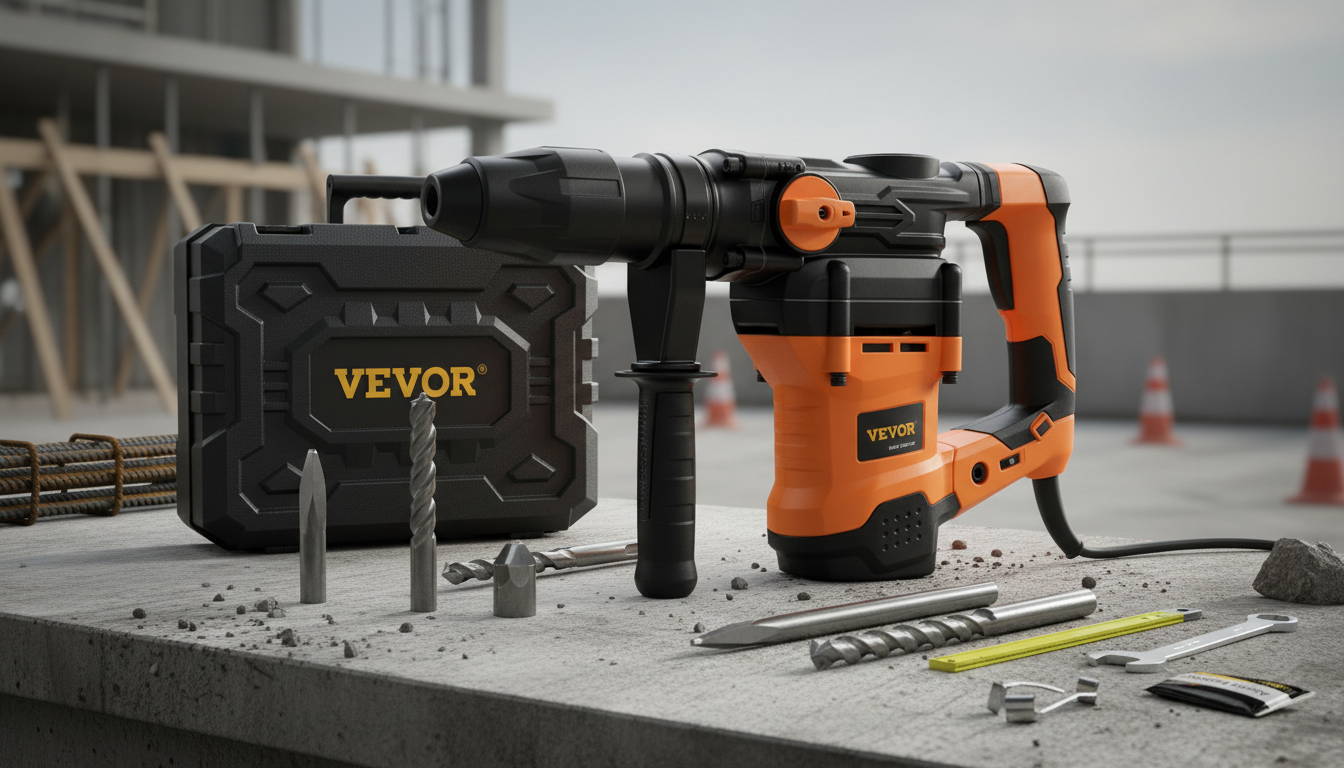
1600W Heavy-Duty Rotary Hammer Drill for Concrete, Masonry, and Demolition Tasks
A heavy-duty rotary hammer drill is built for fast, controlled drilling in concrete and masonry, with the option to switch into hammer-only action for light chipping work. A 1600W-class rotary hammer is a practical step up when standard hammer drills start feeling slow, noisy, and inconsistent in dense material. Below is what to expect from this power class, where it performs best, and how to choose bits, settings, and safety practices for cleaner, more reliable results.
What a rotary hammer drill does differently
Rotary hammers use a piston-style hammering mechanism (electro-pneumatic impact) that delivers higher impact energy than a standard hammer drill. Instead of relying on a vibrating clutch action, the tool drives the bit forward with strong, repeated blows—especially noticeable in poured concrete.
- Higher-impact drilling performance: The piston mechanism transfers impact energy efficiently into the bit, helping holes progress faster with less “buzzing” at the surface.
- Multiple working modes: Many rotary hammers offer rotary-only drilling (useful for wood/metal with proper bits), hammer drilling for concrete/masonry, and (on some models) hammer-only for chiseling.
- Made for real masonry tasks: Ideal for anchor holes, conduit runs, ledger boards, masonry fasteners, and breaking thin concrete or tile when paired with compatible chisels.
Quick look: 1600W Heavy-Duty Rotary Hammer Drill
A 1600W rotary hammer drill is aimed at demanding drilling and hammering workloads—when you need repeatable holes without fighting the tool. It’s a solid fit for DIYers working on structural wall drilling and for contractors who want a budget-friendly jobsite hammer for anchors, blocking, and occasional chipping.
- Power class: 1600W, designed for tougher concrete and longer drilling sessions.
- Typical jobs: Concrete block, poured concrete, brick, and stone; occasional chipping with a chisel attachment (depending on supported accessories).
- Availability: In stock—confirm current quantity and delivery details on the product page.
1600W Heavy-Duty Rotary Hammer Drill
At-a-glance feature guide (what to look for and why it matters)
| Feature area | What to verify | Why it matters on the job |
|---|---|---|
| Power & load handling | 1600W-class motor and sustained performance under pressure | Helps maintain drilling speed in dense concrete and reduces stalling |
| Operating modes | Rotary / Hammer drilling / Hammer-only (if available) | Ensures the tool can switch from drilling anchors to light demolition tasks |
| Bit/chuck system | Supported shank type (commonly SDS-style on rotary hammers) | Determines which bits and chisels fit and how securely they lock in |
| Control & comfort | Auxiliary handle, depth control, and balanced grip | Improves accuracy, reduces wrist strain, and helps keep holes to a consistent depth |
| Dust management | Compatibility with vacuum attachments or dust extraction practices | Cuts down silica exposure and keeps holes cleaner for better anchor hold |
| Service & wear items | Brushes, grease points, and access to replacement parts | Extends tool life and reduces downtime |
Where it shines: common projects and materials
- Concrete and masonry drilling: Anchor bolts, Tapcon-style fasteners, wedge anchors, and sleeve anchors. Always match hole diameter and depth to the anchor specification so the fastener seats correctly.
- Block and brick: Faster progress with less skating when you start straight and use a proper masonry bit. Lighter pressure often works better in softer block—let the impact do the work.
- Tile removal and light chipping: Useful for thinset removal or small channels when using a compatible chisel and hammer-only mode. Work in short bursts to reduce heat and keep control at edges.
- Overhead drilling: Possible but demanding. Use stable footing, an auxiliary handle, and frequent breaks to manage fatigue and maintain alignment.
If long sessions leave you feeling worn down after louder demolition-style work, some users also keep a simple wind-down routine handy after the job: How To Relax Your Body And Live With Less Stress.
Settings, technique, and bits that reduce blowouts and binding
Safety and dust control for masonry drilling
- Respiratory protection: Use a suitable respirator and follow workplace requirements. Refer to OSHA’s Respirable Crystalline Silica Standard (Construction) for guidance on compliance and controls.
- Eye and hearing protection: Impact drilling is loud and can eject chips—wear safety glasses and hearing protection.
- Secure the work area: Avoid drilling into unknown walls; verify electrical/plumbing paths and consider rebar in structural concrete where applicable.
- Manage corded power safely: Keep cords clear of the bit path and avoid tension that could pull the tool off line.
- Control kickback: Use the auxiliary handle, keep a solid stance, and stop immediately if the bit binds.
For additional practical dust control approaches on construction tasks, see NIOSH silica dust control resources.
Care, storage, and keeping performance consistent
What to confirm before ordering
FAQ
What is the difference between a rotary hammer drill and a hammer drill?
A rotary hammer uses a piston-style mechanism that delivers stronger impact energy into the bit, so it typically drills faster and more consistently in concrete. A standard hammer drill uses a vibrating clutch action that works for lighter masonry but can be slower and more fatiguing for repeated concrete drilling.
Can a heavy-duty rotary hammer drill be used for chiseling or tile removal?
Yes, if the tool supports a hammer-only mode and accepts compatible chisels for its shank system. It’s well-suited for light demolition like tile/thinset removal and small channels, but it isn’t a replacement for a dedicated large breaker for thick slab removal.
What bits should be used for concrete anchors?
Use masonry-rated bits that match the anchor manufacturer’s specified hole diameter and are compatible with the tool’s chuck/shank system. Drill to the required depth and clean the hole of dust before setting the anchor so it can grip properly.
Recommended for you
Was this article helpful?
Yes
No









Leave a comment