-
Shop
- Advanced Technologies
- Arts, Crafts & Hobbies
- Bathroom
- Best Sellers
- Car Accessories
- Dating & Social Skills
- Digital Resources
- Beauty
- Electronics & Technology
- Emotional Intelligence
- Home Styling & Organization
- Mindfulness
- Nutrition & Healthy Eating
- Personal Style & Fashion
- Pet Lifestyle & Wellness
- Positive Thinking
- Productivity
- Self Confidence
- Sleep Improvement
- Stress Management & Relaxation
- TikTok Growth & Monetization Mastery
- Travel & Adventure
- Yoga & Mind-Body Practices
- Education & Learning
- Family & Parenting
- Fashion
- Alexander McQueen
- Bags
- Bags & Wallets
- Balenciaga
- Belts
- Blazers
- Bottega Veneta
- Brunello Cucinelli
- Burberry
- Chanel
- Chloé
- Dior
- Dolce & Gabbana
- Dresses
- Etro
- Fendi
- Gucci
- Hats & Hair Accessories
- Jacquemus
- Jewelry
- Jil Sander
- Jimmy Choo
- Kiton
- Luggage
- Miu Miu
- Off-White
- Outerwear
- Prada
- Rick Owens
- Saint Laurent
- Socks & Tights
- Sunglasses
- The Row
- Tom Ford
- Valentino
- Valentino Garavani
- Versace
- Vivienne Westwood
- Watches
- Fashion Accessories
- Furniture
- Gadgets
- Health & Beauty
- Health & Wellness
- Home & Garden
- Home Electronics
- Home Supplies
- Kids & Babies
- Kitchen
- Lighting
- Mindset
- Patio, Lawn & Garden
- Personal Growth
- Pet Care
- Pet Supplies
- Pets
- Shoes
- Sport & Outdoors
- Super Deals
- Travel
- Wealth
- Wealth Building
- Budgeting & Saving
- Cryptocurrency Investing
- Debt Management
- Entrepreneurship & Business Growth
- Family Finance & Budgeting
- Financial Independence
- Financial Mindset & Psychology
- Financial Planning
- Frugal Living & Expense Hacks
- Goal Setting
- High-Income Skills
- Investing Basics
- Leadership
- Motivation
- Networking & Mentorship
- Passive Income Strategies
- Real Estate Investing
- Side Hustles
- Stock Market Investing
- Winter Fashion
- YouTube Shorts Best-Sellers
Mini Wooden Tool Bench for Kids: Build, Learn, Play
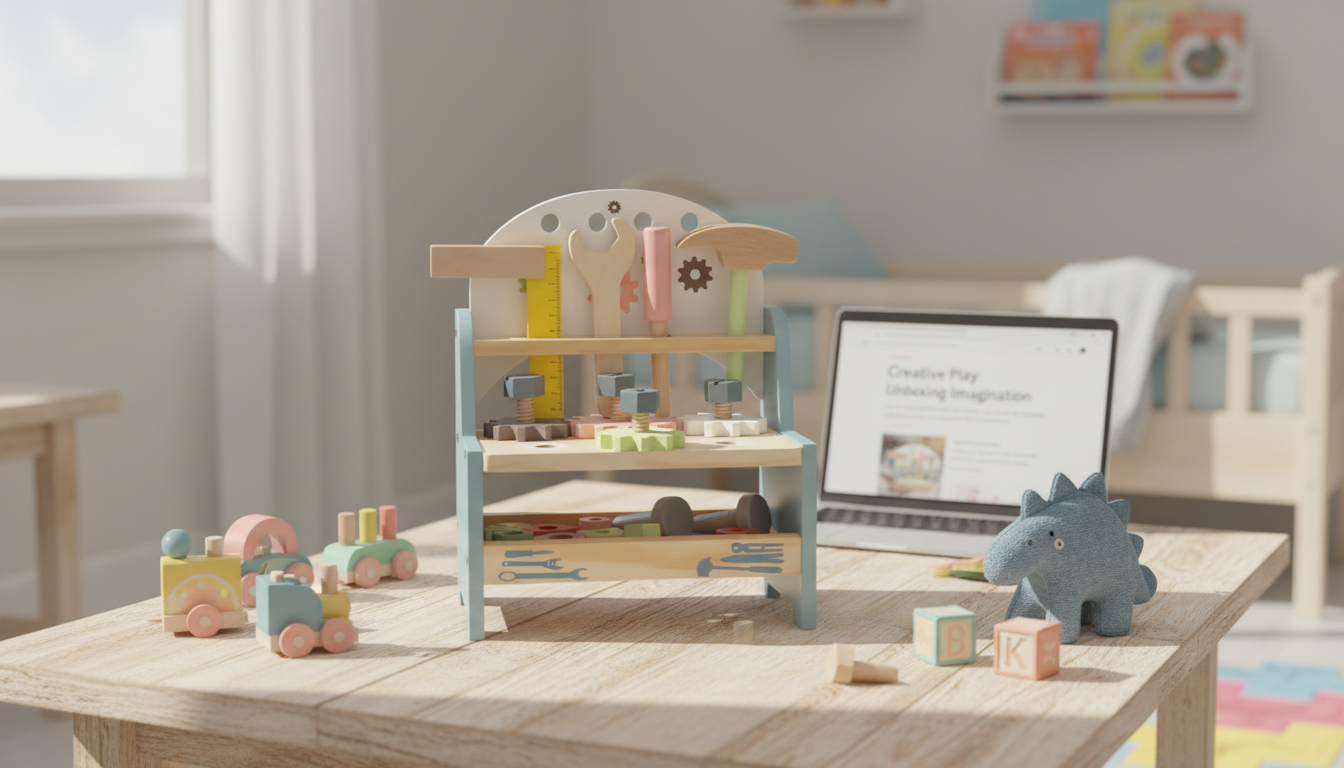
Mini Wooden Tool Bench Set for Kids: Educational Pretend-Play Construction Fun
A wooden tool bench brings hands-on pretend building into everyday play, supporting fine-motor practice, early problem-solving, and confidence through safe, repeatable “real world” routines. A good set invites kids to plan, build, adjust, and try again—without screens or complicated setup. Below are practical things to look for in a kids’ wooden tool bench, simple ways to use it for learning, and why a compact bench can be a strong choice for playrooms and smaller spaces.
What a Wooden Tool Bench Adds to Pretend Construction Play
Kids love to copy what they see adults do, and a tool bench turns that curiosity into a structured, repeatable play pattern. Instead of random toy time, children naturally practice “jobs” that have a beginning, middle, and end.
- Encourages role play that mirrors real-life tasks, helping kids practice sequences like planning, building, and tidying.
- Builds early engineering thinking through experimenting with parts, connections, and stability (what holds, what wobbles, what fits).
- Offers a screen-free activity that can be repeated daily with new “projects” created from the same set of pieces.
- Supports social play—taking turns with tools, assigning roles (builder, helper, inspector), and explaining ideas.
Play is also widely recognized as essential to healthy development, including social-emotional growth and resilience. Helpful background reading includes the American Academy of Pediatrics’ guidance on the power of play.
Learning Skills Kids Practice While They Build
Tool-bench play looks simple, but it’s packed with “whole body” learning. Small, repeated actions—turning a bolt, aligning a peg, holding a piece steady—help kids build control and confidence over time.
- Fine-motor skills: grasping, twisting, turning, and aligning parts improves hand strength and dexterity.
- Hand–eye coordination: matching holes to pegs or bolts and positioning pieces precisely.
- Early math and logic: sorting by size/shape, counting parts, comparing lengths, and following simple patterns.
- Language development: naming tools, describing steps (“first/next/last”), and learning action words (tighten, loosen, measure).
- Persistence and emotional skills: trying again after a piece doesn’t fit, and feeling capable after finishing a build.
Skill-building ideas with a wooden tool bench
| Play activity | What kids practice | Quick prompt to try |
|---|---|---|
| Sort and organize tools and parts | Categorizing, counting, tidy-up routines | “Can you find all the pieces that match this shape?” |
| Build a simple “bridge” or “tower” | Balance, stability, problem-solving | “What could make it stronger?” |
| Copy a model from an adult or sibling | Visual matching, sequencing, attention | “Let’s build it step-by-step together.” |
| Pretend repair shop | Role play, communication, turn-taking | “Tell me what’s broken and how you’ll fix it.” |
For a deeper look at play-based learning principles, the National Association for the Education of Young Children provides clear guidance on developmentally appropriate practice.
Why Choose Wood for a Kids’ Tool Bench Set
Wooden sets tend to slow play down in a good way. The pieces feel substantial, which encourages careful placement and more deliberate building—great for kids who benefit from calming, focused activities.
- Comfortable tactile experience that invites longer, calmer play sessions.
- Sturdy feel helps kids learn controlled movement (placing tools down, aligning parts) rather than rushing.
- Classic, giftable look that fits playrooms, bedrooms, and classrooms.
- When properly finished, wood can be durable for repeated assembling and disassembling.
Safety and Quality Checks Parents Appreciate
A toy tool bench should feel “real” to kids while still being made for safe, age-appropriate play. Before buying (and periodically after lots of use), it helps to scan for a few practical details.
For general toy safety guidance, the U.S. Consumer Product Safety Commission has a helpful overview at CPSC Toy Safety.
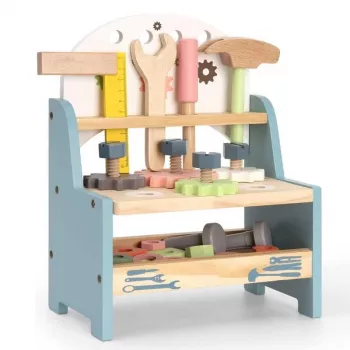
Mini Wooden Tool Bench Set for Kids: A Compact Option for Big Imagination
Product page for details and current availability: Mini Wooden Tool Bench Set for Kids – Educational Pretend Play Construction Toy.
At-a-glance buying considerations (mini bench)
| Consideration | Why it matters | What to look for |
|---|---|---|
| Bench size | Fits your play space and storage | A footprint that works on the floor or a low table |
| Tool variety | More ways to role play and problem-solve | A mix of tools and fasteners for multiple build types |
| Assembly style | How challenging it feels | Easy start for beginners, room to grow for older kids |
| Cleanup method | Fewer lost parts, faster tidy-up | Dedicated spots or a container for pieces |
Simple Play Setups and “Construction Missions”
For parents who enjoy pairing kids’ quiet play with a small reset of their own, these in-stock items can complement the routine: How To Relax Your Body And Live With Less Stress and Checklist: Bright Mind Boost — Your Simple Daily Guide to Staying Positive.
Choosing the Right Tool Bench for Different Ages
FAQ
What age is a wooden tool bench set best for?
It can work well from toddlerhood through early elementary, as long as the part sizes and build complexity match your child’s stage. For younger kids, choose larger pieces and supervise closely if small parts could be mouthed. Older kids often enjoy more steps, simple “plans,” and problem-solving challenges.
How can a tool bench support learning at home?
Tool-bench play strengthens fine-motor skills, sequencing (“first, next, last”), and problem-solving as kids test what fits and what holds steady. It also supports early math through sorting and counting pieces, plus language as children name tools and explain their “repair” plan. Try a quick repair-shop role play, a tower-building challenge, or a tidy-and-count cleanup routine.
How do you keep tool bench pieces from getting lost?
Use one labeled bin or lidded container for all parts, and bring it out only during tool-bench time. Keep play on a small mat or defined zone so pieces don’t wander, and end each session with a simple count-and-return routine. Storing small fasteners together immediately after play prevents the most common losses.
Recommended for you
Was this article helpful?
Yes
No









Leave a comment