-
Shop
- Advanced Technologies
- Arts, Crafts & Hobbies
- Bathroom
- Best Sellers
- Car Accessories
- Dating & Social Skills
- Digital Resources
- Beauty
- Electronics & Technology
- Emotional Intelligence
- Home Styling & Organization
- Mindfulness
- Nutrition & Healthy Eating
- Personal Style & Fashion
- Pet Lifestyle & Wellness
- Positive Thinking
- Productivity
- Self Confidence
- Sleep Improvement
- Stress Management & Relaxation
- TikTok Growth & Monetization Mastery
- Travel & Adventure
- Yoga & Mind-Body Practices
- Education & Learning
- Family & Parenting
- Fashion
- Alexander McQueen
- Bags
- Bags & Wallets
- Balenciaga
- Belts
- Blazers
- Bottega Veneta
- Brunello Cucinelli
- Burberry
- Chanel
- Chloé
- Dior
- Dolce & Gabbana
- Dresses
- Etro
- Fendi
- Gucci
- Hats & Hair Accessories
- Jacquemus
- Jewelry
- Jil Sander
- Jimmy Choo
- Kiton
- Luggage
- Miu Miu
- Off-White
- Outerwear
- Prada
- Rick Owens
- Saint Laurent
- Socks & Tights
- Sunglasses
- The Row
- Tom Ford
- Valentino
- Valentino Garavani
- Versace
- Vivienne Westwood
- Watches
- Fashion Accessories
- Furniture
- Gadgets
- Health & Beauty
- Health & Wellness
- Home & Garden
- Home Electronics
- Home Supplies
- Kids & Babies
- Kitchen
- Lighting
- Mindset
- Patio, Lawn & Garden
- Personal Growth
- Pet Care
- Pet Supplies
- Pets
- Shoes
- Sport & Outdoors
- Super Deals
- Travel
- Wealth
- Wealth Building
- Budgeting & Saving
- Cryptocurrency Investing
- Debt Management
- Entrepreneurship & Business Growth
- Family Finance & Budgeting
- Financial Independence
- Financial Mindset & Psychology
- Financial Planning
- Frugal Living & Expense Hacks
- Goal Setting
- High-Income Skills
- Investing Basics
- Leadership
- Motivation
- Networking & Mentorship
- Passive Income Strategies
- Real Estate Investing
- Side Hustles
- Stock Market Investing
- Winter Fashion
- YouTube Shorts Best-Sellers
Multi-Pet Household Harmony: Setup, Routines & Introductions
Living Well With More Than One Pet
Living with more than one pet can be joyful—and chaotic. A few predictable pressure points (introductions, territory, food, attention, and overstimulation) often drive the tension. The good news: you don’t need a “perfect” household or pets that instantly bond. You need practical systems that help everyone feel safe, reduce conflict, and build day-to-day cooperation without turning your home into a constant management project.
Why multi-pet homes get tense (and why it’s fixable)
Most multi-pet conflict isn’t “bad behavior.” It’s often a pet trying to protect what matters: space, food, access to people, or the ability to rest without being bothered. When those needs feel uncertain, competition shows up as chasing, blocking, growling, swatting, stealing toys, or escalating at doorways.
Stress also stacks in small ways: noise, tight pathways, shared litter zones, inconsistent schedules, and chaotic greetings. Fixing the environment usually improves harmony faster than focusing only on training. The goal is progress you can measure—shorter recovery times, fewer escalations, and more relaxed body language—rather than instant best-friends energy.
Set up the home so pets don’t have to compete
Think of your home like a shared workplace: clear routes, predictable stations, and enough “personal offices” to decompress. When pets can move around without surprise encounters or getting cornered, you’ll see fewer flare-ups.
- Create traffic lanes: keep doorways, halls, and stairs clear; add baby gates to prevent crowding in bottlenecks.
- Add vertical and private options: cat trees, shelves, covered beds, and quiet corners reduce “hovering” and crowding.
- Duplicate key resources: multiple water bowls, resting spots, scratchers, and litter boxes—spread across different rooms.
- Use visual boundaries: rugs, pens, and gates create predictable “settle zones” and reduce surprise encounters.
- Protect decompression zones: at least one calm, low-traffic area per pet (or per species) with a routine they can count on.
Home setup checklist for smoother co-living
| Hotspot | Common trigger | Simple fix |
|---|---|---|
| Feeding area | Guarding bowls or rushing the other pet | Separate feeding stations; use barriers; pick up leftovers |
| Hallways/doorways | Blocking, shoulder-checking, chase starts | Clear path; add a gate; teach “wait” at thresholds |
| Couches/beds | Jealousy over access to people or prime spots | Add extra beds; invite pets up one at a time; reinforce calm settling |
| Litter/pee zones | Ambushes or avoidance leading to accidents | Multiple boxes in separate areas; uncovered options; ensure escape routes |
| Playtime | Overarousal and redirected nipping/swatting | Shorter sessions; rotate toys; end play before intensity spikes |
Introductions and re-introductions that reduce conflict
Whether you’re adding a new pet or repairing a rocky relationship, structured introductions lower pressure and prevent early “bad history.” Start slower than you think you need—speed can create setbacks that take longer to undo.
- Begin with separation and scent exchange: swap bedding, allow sniffing under a door, and pair exposure with calm rewards.
- Move to controlled visual access: a baby gate or cracked door is ideal; end sessions while both pets are still relaxed.
- Keep early interactions short and parallel: gentle sniffing, foraging, or calm play is better than face-to-face pressure.
- Watch body language closely: stiff posture, fixed stare, stalking, pinned ears, hard tail movements, or silent freezing means “too close, too soon.”
- If a fight occurs: reset with a cool-down period and return to earlier steps instead of forcing “work it out.”
For species-specific guidance, reputable organizations emphasize gradual, safety-first steps. See the American Veterinary Society of Animal Behavior (AVSAB) position statements and the ASPCA guidance on cat aggression and introductions.
Daily routines that prevent jealousy and overwhelm
Predictable cadence reduces tension because pets stop “checking” for surprises. When the household rhythm is stable, attention-seeking and guarding behaviors often soften.
Food, toys, and space: preventing resource guarding
For a clear, practical overview of guarding patterns and prevention, the American Kennel Club’s resource guarding guide is a helpful reference point.
When the home feels loud: managing arousal and conflict safely
A practical guide to make it easier day one
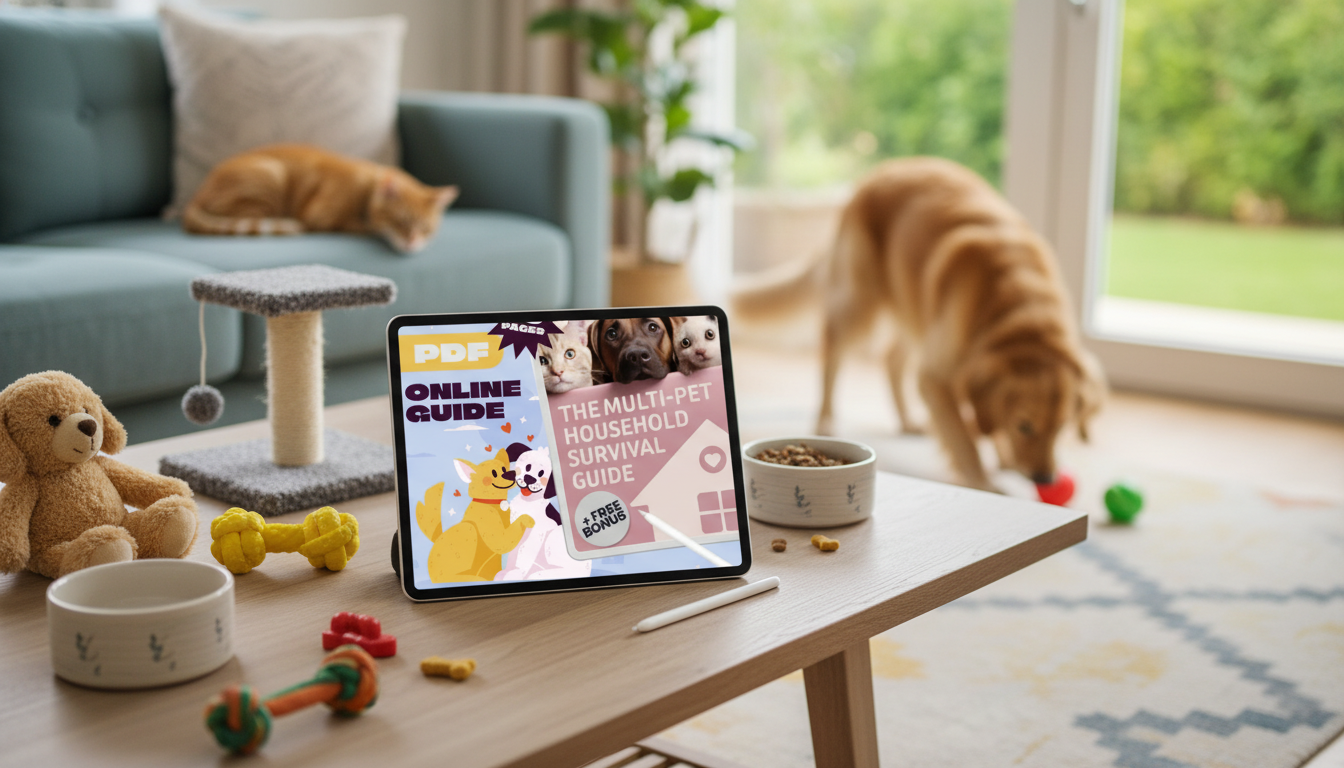
Having a structured reference speeds up troubleshooting because you can check the exact step you need in the moment—before tension spirals. The Multi-Pet Household Survival Guide (digital download) is designed for quick, real-life use across home setup, introductions, routines, and behavior signals, with an emphasis on prevention and safety-first management rather than dominance-based ideas.
If one of your dogs tends to get overexcited on walks or in shared spaces, structured outings can help drain energy without creating extra chaos at home. A secure walking setup like the Dog Backpack Vest with Leash Buckle can support calmer, more organized movement—especially when you’re rotating solo walks to reduce friction between pets.
FAQ
How long does it take for pets to adjust to living together?
It can take anywhere from a few days to several months, depending on species, age, past experiences, and how well the environment prevents conflict. Look for milestones like relaxed body language, fewer standoffs at hotspots, and predictable routines with faster recovery after excitement.
What should be done if one pet keeps bullying or chasing the other?
Immediately use management (gates, separate zones, leashes for dogs) to stop rehearsing the behavior, then reduce arousal with structured play and calm enrichment. Reinforce alternative behaviors like “go to mat,” and contact a certified behavior professional or your veterinarian if chasing escalates, causes injuries, or the targeted pet can’t relax.
Is it normal for pets to growl or hiss during introductions?
Yes—those signals can be normal communication, especially when a pet needs more space. If the intensity increases (staring, stiff posture, stalking, freezing), increase distance, shorten sessions, and pair calm exposure with rewards instead of pushing closer.
Recommended for you


Was this article helpful?
Yes
No









Leave a comment