-
Shop
- Advanced Technologies
- Arts, Crafts & Hobbies
- Bathroom
- Best Sellers
- Car Accessories
- Dating & Social Skills
- Digital Resources
- Beauty
- Electronics & Technology
- Emotional Intelligence
- Home Styling & Organization
- Mindfulness
- Nutrition & Healthy Eating
- Personal Style & Fashion
- Pet Lifestyle & Wellness
- Positive Thinking
- Productivity
- Self Confidence
- Sleep Improvement
- Stress Management & Relaxation
- TikTok Growth & Monetization Mastery
- Travel & Adventure
- Yoga & Mind-Body Practices
- Education & Learning
- Family & Parenting
- Fashion
- Alexander McQueen
- Bags
- Bags & Wallets
- Balenciaga
- Belts
- Blazers
- Bottega Veneta
- Brunello Cucinelli
- Burberry
- Chanel
- Chloé
- Dior
- Dolce & Gabbana
- Dresses
- Etro
- Fendi
- Gucci
- Hats & Hair Accessories
- Jacquemus
- Jewelry
- Jil Sander
- Jimmy Choo
- Kiton
- Luggage
- Miu Miu
- Off-White
- Outerwear
- Prada
- Rick Owens
- Saint Laurent
- Socks & Tights
- Sunglasses
- The Row
- Tom Ford
- Valentino
- Valentino Garavani
- Versace
- Vivienne Westwood
- Watches
- Fashion Accessories
- Furniture
- Gadgets
- Health & Beauty
- Health & Wellness
- Home & Garden
- Home Electronics
- Home Supplies
- Kids & Babies
- Kitchen
- Lighting
- Mindset
- Patio, Lawn & Garden
- Personal Growth
- Pet Care
- Pet Supplies
- Pets
- Shoes
- Sport & Outdoors
- Super Deals
- Travel
- Wealth
- Wealth Building
- Budgeting & Saving
- Cryptocurrency Investing
- Debt Management
- Entrepreneurship & Business Growth
- Family Finance & Budgeting
- Financial Independence
- Financial Mindset & Psychology
- Financial Planning
- Frugal Living & Expense Hacks
- Goal Setting
- High-Income Skills
- Investing Basics
- Leadership
- Motivation
- Networking & Mentorship
- Passive Income Strategies
- Real Estate Investing
- Side Hustles
- Stock Market Investing
- Winter Fashion
- YouTube Shorts Best-Sellers
37-Gallon Dual Chamber Compost Tumbler: Fast, Clean Results
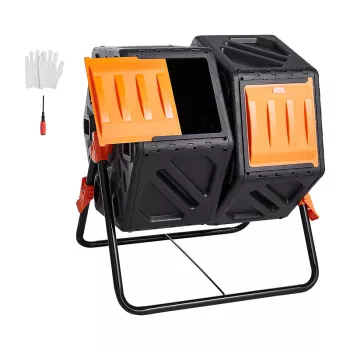
37-Gallon Dual Chamber Composting: Cleaner, Faster, and Easier to Keep Up With
A dual chamber compost tumbler keeps materials moving without the mess and muscle of turning an open pile. With two separate chambers, one side can “cook” toward a finished batch while the other takes fresh kitchen scraps, helping maintain a steady supply of usable compost. Add easy rolling and built-in airflow, and a 37-gallon system becomes a practical fit for many backyards—especially when the mix is fed consistently and kept in balance.
Why a dual chamber tumbler makes composting simpler
Traditional compost piles can work well, but they also come with common hassles: soggy bottoms, uneven aeration, pests, and the chore of turning a heavy mound. A dual chamber tumbler streamlines the routine.
- Two chambers support a continuous cycle: one side finishes while the other accepts new scraps, so you’re not constantly “resetting” the whole bin.
- Fewer pile problems: enclosed composting helps reduce pests, excess rain saturation, and compaction that slows decomposition.
- Tumbling mixes materials evenly: regular rolling distributes greens and browns to limit odors and prevent wet pockets from matting.
- Heat retention with oxygen exchange: a closed design can hold warmth better than a loose pile while vents keep aerobic microbes supplied with air.
Key features that affect speed, odor control, and usability
Not all tumblers are equally pleasant to use week after week. A few design details make the difference between “set it and forget it” convenience and a bin that’s hard to turn or easy to overfill.
- Capacity (37 gallons): a solid size for many households and small gardens, as long as you avoid packing it too full—materials need room to tumble.
- Easy rolling: a smooth roll encourages frequent turning, which improves aeration and helps compost break down faster and more evenly.
- Airflow: vents and internal circulation channels help keep the process aerobic, reducing sour, anaerobic smells.
- Access doors: wide openings make loading scraps and removing finished compost simpler and less messy.
- Weather resistance: sturdy panels and reliable hardware help the tumbler hold up through sun, rain, and seasonal temperature changes.
| Feature | Why it matters | Practical check |
|---|---|---|
| Dual chambers | Keeps fresh inputs separate from finishing compost | One side can stay closed to finish while the other is fed |
| Easy rolling / smooth tumbling | More turns per week = faster, more even breakdown | Can roll without jerking, even when partially full |
| Airflow vents | Prevents anaerobic conditions and reduces odor | Multiple vents; no need to leave doors cracked |
| Stable base / support | Prevents wobble and makes turning safer | Sits level; doesn’t tip when rotated |
| Access door size and latch | Easy loading and clean removal | Door opens wide; latch closes securely |
Setting up the tumbler for best results
A good setup reduces odor, speeds breakdown, and makes turning feel effortless rather than frustrating.
- Placement: set the tumbler on a flat, well-drained surface. Partial sun can help maintain warmth without overheating in hot climates.
- Start-up layer: begin with coarse browns (dry leaves, shredded cardboard) to improve airflow and prevent clumps from forming at the start.
- Moisture target: aim for “wrung-out sponge” dampness. Too wet starves the mix of oxygen; too dry slows microbes.
- Turning rhythm: frequent, smaller turns (a few rotations) usually work better than rare, aggressive tumbling.
- Seasonal adjustments: add more browns during rainy periods. During cold snaps, turn a bit less and keep doors shut to retain heat.
Feeding and balancing: what goes in (and what stays out)
Compost success in a tumbler comes down to balance: nitrogen-rich “greens” plus carbon-rich “browns,” with enough airflow and moisture for aerobic microbes.
Troubleshooting: common issues and quick fixes
When compost is ready and how to use it
Product spotlight: 37-gallon dual chamber compost tumbler
If the goal is cleaner composting with fewer chores, a dual chamber tumbler is a straightforward upgrade for many households. The 37-Gallon Dual Chamber Compost Tumbler with Easy Rolling and Airflow is designed to support a steady rotation of “active” and “finishing” batches in a backyard-friendly footprint.
For a well-rounded home routine, some gardeners pair outdoor projects with simple wellness tools—consider How To Relax Your Body And Live With Less Stress or a quick daily reset like Checklist: Bright Mind Boost — Your Simple Daily Guide to Staying Positive | Digital Download for How to Keep Positive Thoughts.
Learn more from trusted composting resources
For deeper guidance on safe inputs, moisture, and best practices, these references are consistently useful: U.S. EPA: Composting at Home, US Composting Council: Composting Basics, and University of Minnesota Extension: Composting Basics.
FAQ
How often should a dual chamber compost tumbler be turned?
Aim for a few rotations every 2–3 days, adjusting based on temperature and moisture. If the chamber is overfilled, tumbling won’t mix well, so keep enough empty space for materials to fall and aerate.
Why does compost in a tumbler smell bad, and how can the odor be fixed?
Bad odors usually come from anaerobic conditions caused by excess moisture or too many greens. Add dry browns, increase turning to bring in oxygen, and pause wet scraps briefly until the smell improves.
How long does it take to make compost in a 37-gallon dual chamber tumbler?
With a balanced mix, frequent turning, and reasonably small pieces, compost can form in weeks to a few months. The dual chambers help by letting one side finish undisturbed while the other continues receiving fresh inputs.
Recommended for you

Was this article helpful?
Yes
No








Leave a comment