-
Shop
- Advanced Technologies
- Arts, Crafts & Hobbies
- Bathroom
- Best Sellers
- Car Accessories
- Dating & Social Skills
- Digital Resources
- Beauty
- Electronics & Technology
- Emotional Intelligence
- Home Styling & Organization
- Mindfulness
- Nutrition & Healthy Eating
- Personal Style & Fashion
- Pet Lifestyle & Wellness
- Positive Thinking
- Productivity
- Self Confidence
- Sleep Improvement
- Stress Management & Relaxation
- TikTok Growth & Monetization Mastery
- Travel & Adventure
- Yoga & Mind-Body Practices
- Education & Learning
- Family & Parenting
- Fashion
- Alexander McQueen
- Bags
- Bags & Wallets
- Balenciaga
- Belts
- Blazers
- Bottega Veneta
- Brunello Cucinelli
- Burberry
- Chanel
- Chloé
- Dior
- Dolce & Gabbana
- Dresses
- Etro
- Fendi
- Gucci
- Hats & Hair Accessories
- Jacquemus
- Jewelry
- Jil Sander
- Jimmy Choo
- Kiton
- Luggage
- Miu Miu
- Off-White
- Outerwear
- Prada
- Rick Owens
- Saint Laurent
- Socks & Tights
- Sunglasses
- The Row
- Tom Ford
- Valentino
- Valentino Garavani
- Versace
- Vivienne Westwood
- Watches
- Fashion Accessories
- Furniture
- Gadgets
- Health & Beauty
- Health & Wellness
- Home & Garden
- Home Electronics
- Home Supplies
- Kids & Babies
- Kitchen
- Lighting
- Mindset
- Patio, Lawn & Garden
- Personal Growth
- Pet Care
- Pet Supplies
- Pets
- Shoes
- Sport & Outdoors
- Super Deals
- Travel
- Wealth
- Wealth Building
- Budgeting & Saving
- Cryptocurrency Investing
- Debt Management
- Entrepreneurship & Business Growth
- Family Finance & Budgeting
- Financial Independence
- Financial Mindset & Psychology
- Financial Planning
- Frugal Living & Expense Hacks
- Goal Setting
- High-Income Skills
- Investing Basics
- Leadership
- Motivation
- Networking & Mentorship
- Passive Income Strategies
- Real Estate Investing
- Side Hustles
- Stock Market Investing
- Winter Fashion
- YouTube Shorts Best-Sellers
5-Step Folding Dog Stairs for Cars: Safer Dog Access
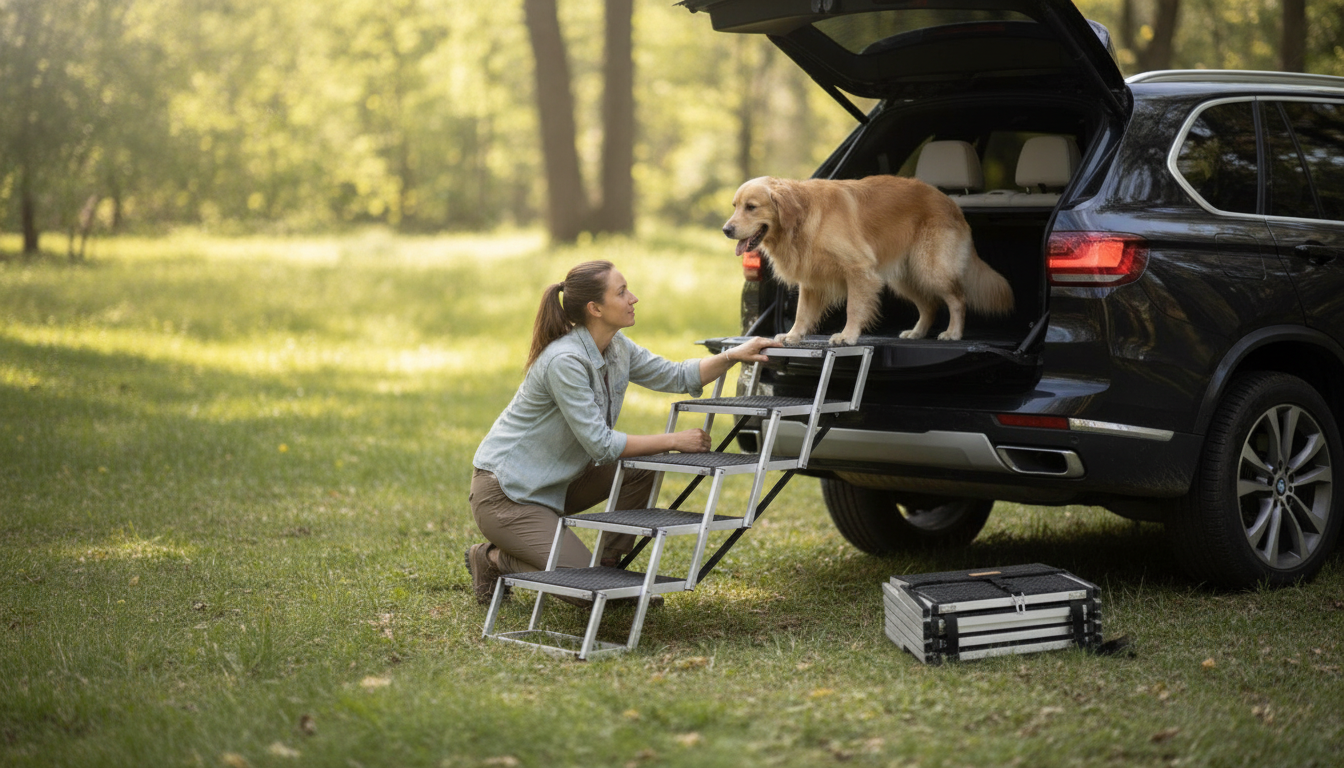
5-Step Folding Dog Stairs for Cars: Safer Car Entry for Dogs of All Sizes
Jumping in and out of a vehicle can strain a dog’s joints and increase the risk of slips, especially for seniors, short-legged breeds, and dogs recovering from injury. Folding dog stairs offer a steadier, more predictable path to the seat or cargo area, with secure steps that collapse down for travel and storage. For many households, the biggest win isn’t just convenience—it’s reducing repeated impact on hips, knees, elbows, and paws during everyday “in and out” routines.
When car stairs make the biggest difference
- Older dogs and dogs with arthritis or hip issues that benefit from reduced impact
- Small breeds and long-backed dogs that struggle with tall seat heights
- Large dogs that hesitate to jump due to slick surfaces or uncertain footing
- Post-surgery or recovery periods when controlled movement matters
- Multi-stop days (vet, grooming, hikes) where repeated jumps add up
If mobility concerns are already present, reputable veterinary guidance can help you understand what your dog’s joints are coping with and what “low-impact” movement really means. Two helpful references are the AAHA overview on arthritis in dogs and the American College of Veterinary Surgeons page on osteoarthritis.
What to look for in folding dog stairs for cars
- Step count and rise: more steps usually means a gentler climb and less strain
- Traction: textured or grippy step surfaces help prevent slipping with wet paws
- Stability: a wide base, secure locking, and anti-slip feet reduce wobble
- Vehicle fit: consider seat height, SUV cargo lip height, and door opening clearance
- Portability: folding design, carry handle, and storage size for trunks or back seats
- Weight capacity: choose a rating that comfortably exceeds the dog’s weight
- Ease of cleaning: wipe-clean surfaces are helpful for mud, sand, and shedding
A quick reality check helps: stairs should feel “boringly steady.” If they flex or twist when the dog pauses mid-step, confidence drops fast. Look for a design that locks open firmly and sits flat on the ground without teetering.
Quick comparison: stairs vs ramp vs lifting
Some dogs prefer a step-by-step rhythm, while others do best with a continuous ramp surface. If a dog struggles to flex joints comfortably, a ramp can feel more natural. For very small dogs, lifting can work—until a busy day, a wiggly pup, or a high SUV turns it into a back-straining routine.
| Option | Best for | Watch-outs |
|---|---|---|
| Folding stairs | Dogs that can climb steps but shouldn’t jump | Needs stable footing and correct height/angle |
| Ramp | Dogs with limited joint flexion or very cautious movement | Can feel slippery or too steep if too short |
| Lifting | Small dogs for short trips | Risk of back strain; hard with wiggly dogs |
Featured pick: 5-Step Folding Dog Stairs for Cars
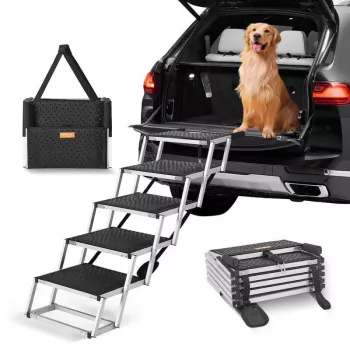
A five-step design is a popular “sweet spot” for many vehicles because it breaks the climb into smaller, more manageable movements. The 5-Step Folding Dog Stairs for Cars are built around that gradual, repeatable cadence—helpful for dogs that hesitate at a big jump but will willingly take a few confident steps.
- Five steps help create a more gradual climb for many vehicle heights
- Folding design supports quick setup and compact storage between stops
- Useful for daily routines like commuting, errands, trails, and vet visits
- Consider placing stairs on a flat surface and checking for secure contact before each use
For outings where a dog is already wearing a harness, a travel-ready accessory can make transitions easier. The Dog Backpack Vest with Leash Buckle can be useful for keeping essentials together while still providing a leash connection point for controlled, calm stair practice.
How to measure your vehicle and choose the right setup
- Measure from the ground to the entry point: seat edge for sedans or cargo lip for SUVs.
- Confirm door clearance: make sure the stairs can sit squarely without twisting sideways or bumping trim.
- Check the ground surface: if the shoulder is sloped, reposition to avoid wobble and re-check footing.
- Reduce the angle when possible: for taller vehicles, more steps (or a longer base) typically feels less intimidating.
- Have a backup plan: if a dog refuses steps even with training, a ramp may be a better confidence builder.
As a practical test, set the stairs in place and press down on the top step with your hand. If the stairs shift, compress, or rock, adjust placement before inviting your dog to try.
Training tips for confident, calm use
Safety and maintenance checklist
FAQ
Are car stairs better than a ramp for dogs with arthritis?
It depends on how your dog moves comfortably: some dogs prefer gradual steps, while others need a ramp to avoid joint flexion on stair-like motion. For noticeable pain or significant mobility limits, choose the gentlest angle option your dog will use calmly and check with your vet for individualized guidance.
How do you keep folding dog stairs from slipping next to a car?
Place the stairs on flat, solid ground and confirm the anti-slip feet are making full contact. Keep step surfaces clean and dry, add a non-slip mat if you’re parked on a slick surface, and guide your dog slowly during early training so they don’t rush and shift the base.
What vehicle height works well with 5-step dog stairs?
Measure from the ground to your dog’s entry point (seat edge or cargo lip) to confirm fit. Five steps often works well for many sedans and SUVs by reducing the climb angle, but the best match depends on your exact height and how securely the stairs sit without becoming steep or unstable.
Recommended for you
Was this article helpful?
Yes
No








Leave a comment