-
Shop
- Advanced Technologies
- Arts, Crafts & Hobbies
- Bathroom
- Best Sellers
- Car Accessories
- Dating & Social Skills
- Digital Resources
- Beauty
- Electronics & Technology
- Emotional Intelligence
- Home Styling & Organization
- Mindfulness
- Nutrition & Healthy Eating
- Personal Style & Fashion
- Pet Lifestyle & Wellness
- Positive Thinking
- Productivity
- Self Confidence
- Sleep Improvement
- Stress Management & Relaxation
- TikTok Growth & Monetization Mastery
- Travel & Adventure
- Yoga & Mind-Body Practices
- Education & Learning
- Family & Parenting
- Fashion
- Alexander McQueen
- Bags
- Bags & Wallets
- Balenciaga
- Belts
- Blazers
- Bottega Veneta
- Brunello Cucinelli
- Burberry
- Chanel
- Chloé
- Dior
- Dolce & Gabbana
- Dresses
- Etro
- Fendi
- Gucci
- Hats & Hair Accessories
- Jacquemus
- Jewelry
- Jil Sander
- Jimmy Choo
- Kiton
- Luggage
- Miu Miu
- Off-White
- Outerwear
- Prada
- Rick Owens
- Saint Laurent
- Socks & Tights
- Sunglasses
- The Row
- Tom Ford
- Valentino
- Valentino Garavani
- Versace
- Vivienne Westwood
- Watches
- Fashion Accessories
- Furniture
- Gadgets
- Health & Beauty
- Health & Wellness
- Home & Garden
- Home Electronics
- Home Supplies
- Kids & Babies
- Kitchen
- Lighting
- Mindset
- Patio, Lawn & Garden
- Personal Growth
- Pet Care
- Pet Supplies
- Pets
- Shoes
- Sport & Outdoors
- Super Deals
- Travel
- Wealth
- Wealth Building
- Budgeting & Saving
- Cryptocurrency Investing
- Debt Management
- Entrepreneurship & Business Growth
- Family Finance & Budgeting
- Financial Independence
- Financial Mindset & Psychology
- Financial Planning
- Frugal Living & Expense Hacks
- Goal Setting
- High-Income Skills
- Investing Basics
- Leadership
- Motivation
- Networking & Mentorship
- Passive Income Strategies
- Real Estate Investing
- Side Hustles
- Stock Market Investing
- Winter Fashion
- YouTube Shorts Best-Sellers
Spark the Sweep: 5-Minute Reset to Start Cleaning
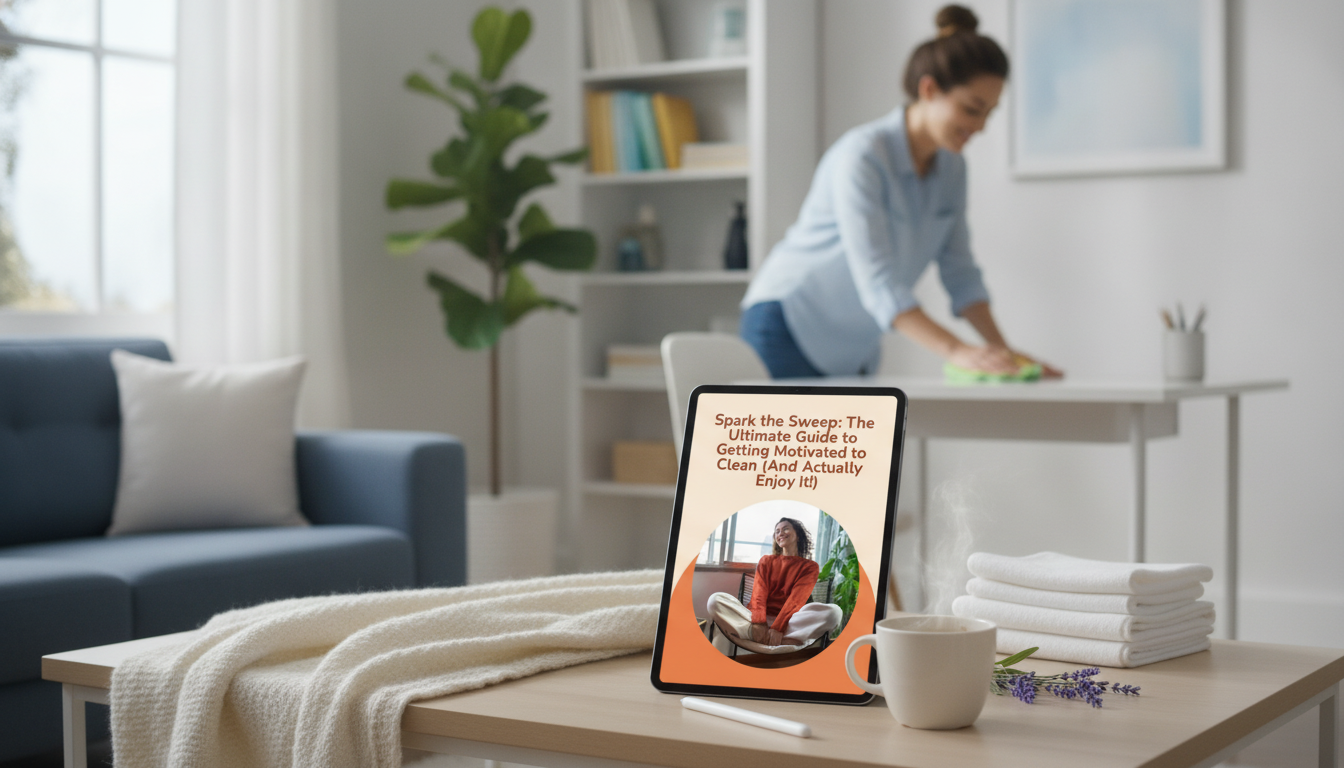
Spark the Sweep: A Simple Way to Get Motivated to Clean (and Start Enjoying It)
Motivation to clean rarely shows up on its own—especially when a space feels overwhelming or the day is already full. The trick is to make starting so easy that momentum can do the heavy lifting. That means shrinking the “first step,” reducing the number of decisions, and creating quick wins your brain can actually register. This guide breaks cleaning into doable steps, adds decluttering shortcuts that reduce effort, and builds a routine that fits real life. For extra structure, the Spark the Sweep digital guide can act like a step-by-step companion for days when energy is low but a reset is still needed.
Why cleaning feels so hard even when the mess is stressing you out
It’s not “laziness.” A messy space can create real mental load, and cleaning often feels difficult for predictable reasons:
- Decision fatigue: Too many options (where to start, what to keep, what counts as “done”) stalls action.
- All-or-nothing thinking: When “clean” equals “perfect,” starting feels pointless.
- Visual overload: Clutter adds constant micro-distractions that make tasks feel heavier.
- Hidden time costs: Looking for supplies, moving piles, and switching rooms drains momentum.
- Low-reward loops: If the finish line is unclear, the brain doesn’t get quick wins that sustain effort.
Motivation is often treated like a prerequisite, but it’s usually the outcome of action. The American Psychological Association defines motivation as the processes that “arouse, sustain, and direct behavior” (APA Dictionary of Psychology: Motivation). In practice, that means a tiny, well-designed start can “turn on” the system that keeps you going.
A 5-minute start that turns motivation on
If cleaning feels huge, make it small on purpose. The goal is not to finish the room—it’s to create a visible win and end the “stuck” feeling.
- Choose one tiny target: A single surface, one basket, or one corner—no roaming.
- Set a timer for 5 minutes: Stop when it ends (continuing is optional).
- Use a “reset kit”: Trash bag, donate bag, wipes, and a catch-all bin for items that belong elsewhere.
- Follow the same micro-order every time: Trash → dishes → laundry → items that have a home → wipe surface.
- End with a visible win: Clear one spot completely so your brain registers progress.
5-minute reset targets
| Space | What to do | Done looks like |
|---|---|---|
| Kitchen counter | Trash, dishes to sink, wipe, return 5 items | One clear section you can prep on |
| Bathroom sink | Put products back, wipe, toss empties | Clear rim and clean faucet area |
| Entryway | Shoes aligned, coats hung, trash out | Walkway clear and easy to use |
| Nightstand | Remove cups/trash, stack essentials, wipe | Only essentials remain |
Decluttering without getting stuck: keep it fast and reversible
Decluttering is where many cleanups derail—because each object becomes a decision. Keep the process moving with “temporary answers” that protect your momentum.
- Use the “maybe box”: Uncertain items go into a sealed box with a date; revisit later instead of debating now.
- Limit by container: Decide the space first (one drawer, one shelf). Keep what fits comfortably.
- Avoid memory spirals: Take a quick photo of sentimental items when the object isn’t needed.
- Declutter in friction-reducing categories: Surfaces, floors, clothes, papers, bathroom products, kitchen duplicates.
- Create one donation station: A bag or bin near the exit so items leave the home quickly.
Key rule: don’t pull everything out “to sort it” unless you’re confident you can finish. A smaller, finished zone beats a larger, half-sorted mess every time.
Make cleaning easier by designing the environment
Cleaning gets dramatically easier when your space does some of the work for you. Reduce friction and starting becomes less of a negotiation.
If stress is part of what makes cleaning feel heavy, it helps to support your nervous system, too. The digital guide How To Relax Your Body And Live With Less Stress can pair well with a reset routine when overwhelm is the main blocker.
A realistic routine that doesn’t require a perfect week
For hygiene-focused guidance, especially during illness seasons, follow established recommendations for cleaning and disinfecting (CDC: How to Clean and Disinfect Your Home).
When a step-by-step guide helps: Spark the Sweep digital guide
Some days, the hardest part isn’t the cleaning—it’s the planning. A clear sequence reduces mental load and helps you start before you feel ready. The Spark the Sweep digital guide is built for that exact moment.
If you want an even lighter “keep going” support tool for everyday mindset, Checklist: Bright Mind Boost — Your Simple Daily Guide to Staying Positive can fit nicely next to your cleaning routine so you’re not relying on willpower alone.
Troubleshooting: common blocks and quick fixes
If you’re feeling persistently overwhelmed, supporting your mental health can make everyday tasks feel more doable. The National Institute of Mental Health has practical resources for stress and self-care (NIMH: Caring for Your Mental Health).
FAQ
How do you get motivated to clean when you’re overwhelmed?
Set a 5-minute timer, pick one tiny zone, follow a fixed order (trash, dishes, laundry, items with a home, wipe), and stop when the timer ends. Aim for one clearly visible win and use a catch-all bin to avoid bouncing between rooms.
What’s the fastest way to declutter without making a bigger mess?
Use two bags (trash/donate) plus a “maybe box,” and declutter by container (one drawer or shelf) instead of pulling everything out. Keep a donation station by the exit so items leave quickly.
How can a cleaning routine stick when motivation comes and goes?
Use daily minimums plus two weekly anchor sessions, keep supplies where you use them, and attach cleaning to a cue like a playlist or podcast. A structured step-by-step guide can also reduce planning fatigue when energy is low.
Recommended for you


Was this article helpful?
Yes
No








Leave a comment