-
Shop
- Advanced Technologies
- Arts, Crafts & Hobbies
- Bathroom
- Best Sellers
- Car Accessories
- Dating & Social Skills
- Digital Resources
- Beauty
- Electronics & Technology
- Emotional Intelligence
- Home Styling & Organization
- Mindfulness
- Nutrition & Healthy Eating
- Personal Style & Fashion
- Pet Lifestyle & Wellness
- Positive Thinking
- Productivity
- Self Confidence
- Sleep Improvement
- Stress Management & Relaxation
- TikTok Growth & Monetization Mastery
- Travel & Adventure
- Yoga & Mind-Body Practices
- Education & Learning
- Family & Parenting
- Fashion
- Alexander McQueen
- Bags
- Bags & Wallets
- Balenciaga
- Belts
- Blazers
- Bottega Veneta
- Brunello Cucinelli
- Burberry
- Chanel
- Chloé
- Dior
- Dolce & Gabbana
- Dresses
- Etro
- Fendi
- Gucci
- Hats & Hair Accessories
- Jacquemus
- Jewelry
- Jil Sander
- Jimmy Choo
- Kiton
- Luggage
- Miu Miu
- Off-White
- Outerwear
- Prada
- Rick Owens
- Saint Laurent
- Socks & Tights
- Sunglasses
- The Row
- Tom Ford
- Valentino
- Valentino Garavani
- Versace
- Vivienne Westwood
- Watches
- Fashion Accessories
- Furniture
- Gadgets
- Health & Beauty
- Health & Wellness
- Home & Garden
- Home Electronics
- Home Supplies
- Kids & Babies
- Kitchen
- Lighting
- Mindset
- Patio, Lawn & Garden
- Personal Growth
- Pet Care
- Pet Supplies
- Pets
- Shoes
- Sport & Outdoors
- Super Deals
- Travel
- Wealth
- Wealth Building
- Budgeting & Saving
- Cryptocurrency Investing
- Debt Management
- Entrepreneurship & Business Growth
- Family Finance & Budgeting
- Financial Independence
- Financial Mindset & Psychology
- Financial Planning
- Frugal Living & Expense Hacks
- Goal Setting
- High-Income Skills
- Investing Basics
- Leadership
- Motivation
- Networking & Mentorship
- Passive Income Strategies
- Real Estate Investing
- Side Hustles
- Stock Market Investing
- Winter Fashion
- YouTube Shorts Best-Sellers
Stop Snoring: 7-Night Checklist to Find What Works
A Simple Checklist Approach to Quieter Nights and Better Sleep
Snoring can come from many everyday factors—sleep position, congestion, alcohol, room air, and bedtime routines. The frustrating part is that it can feel random: one night is quiet, the next night is loud, even when nothing “seems” different. A printable checklist makes it easier to test changes one at a time, track what helps, and build a repeatable plan for calmer nights without guesswork.
Why a checklist works when snoring feels unpredictable
Most snoring advice sounds simple—“sleep on your side,” “avoid alcohol,” “fix congestion”—but it’s hard to know what actually moved the needle. A checklist turns vague ideas into a short set of actions you can run consistently for 7–14 nights, which is usually long enough to spot real patterns.
- Turns broad tips into small, repeatable steps you can test nightly for a week or two.
- Helps separate “one-off” quiet nights from changes that reliably reduce noise.
- Creates a shared plan for couples: what to try, when to try it, and how to judge results.
- Encourages safer experimentation by starting with routine and environment first.
- Makes patterns easier to spot (late meals, alcohol, allergies, dry air, sleep debt).
Common snoring triggers to rule in or out
Snoring happens when airflow causes soft tissues in the upper airway to vibrate. Small changes in posture, congestion, or muscle relaxation can amplify that vibration—especially if more than one factor stacks up on the same night.
- Sleep position: Back-sleeping often worsens airway narrowing; side-sleeping can help.
- Nasal congestion and mouth breathing: Allergies, colds, or chronic stuffiness may increase vibration and dryness.
- Alcohol and sedatives: Can relax throat muscles and intensify snoring.
- Sleep deprivation: Deeper sleep stages may increase snoring in some people.
- Room conditions: Dry air and irritants can worsen congestion and throat dryness.
- Weight changes and neck circumference: May contribute to airway resistance for some individuals.
- Anatomy factors: Deviated septum, enlarged tonsils, or jaw position may play a role.
If you suspect a medical contributor, it can help to review reputable resources such as the Mayo Clinic overview of snoring and the NHLBI (NIH) sleep apnea guide for warning signs and next steps.
A 7-night testing plan (one change at a time)
The fastest way to get useful information is to keep testing simple. Pick a starting point, measure it the same way each morning, and change only one major variable at a time.
- Pick a baseline: Track two nights without changing anything (note bedtime, wake time, alcohol, congestion, and perceived snoring).
- Choose one intervention for nights 3–5: Example: side-sleep strategy or a nasal routine. Keep other variables steady.
- Choose a second intervention for nights 6–7 only if the first is clearly not helping.
- Use a simple scale (0–5): Rate snoring loudness and next-day energy to reduce guesswork.
- Know when to stop self-testing: If there’s daytime sleepiness, choking/gasping, or witnessed breathing pauses, prioritize medical evaluation rather than extended trial-and-error.
Simple nightly tracker (example layout)
| Night | What changed? | Snoring (0–5) | Sleep quality (0–5) | Notes (congestion, alcohol, position) |
|---|---|---|---|---|
| 1 | Baseline | |||
| 2 | Baseline | |||
| 3 | Side-sleep plan | |||
| 4 | Side-sleep plan | |||
| 5 | Side-sleep plan | |||
| 6 | Add humidity / nasal routine | |||
| 7 | Repeat best option |
Bedroom and routine adjustments that often make a difference
Once you’re tracking, start with changes that are low-risk and easy to keep consistent. These options tend to work best when they’re treated like a routine rather than a “one night fix.”
When snoring may be a medical issue
For a clear overview of sleep apnea signs and evaluation, see the American Academy of Sleep Medicine fact sheet.
Printable support: keeping the plan visible and consistent
If stress is part of your sleep picture, pairing a snoring plan with a calming wind-down routine can make the whole system easier to stick with. Options like How To Relax Your Body And Live With Less Stress can support a more consistent bedtime rhythm.
Printable checklist download
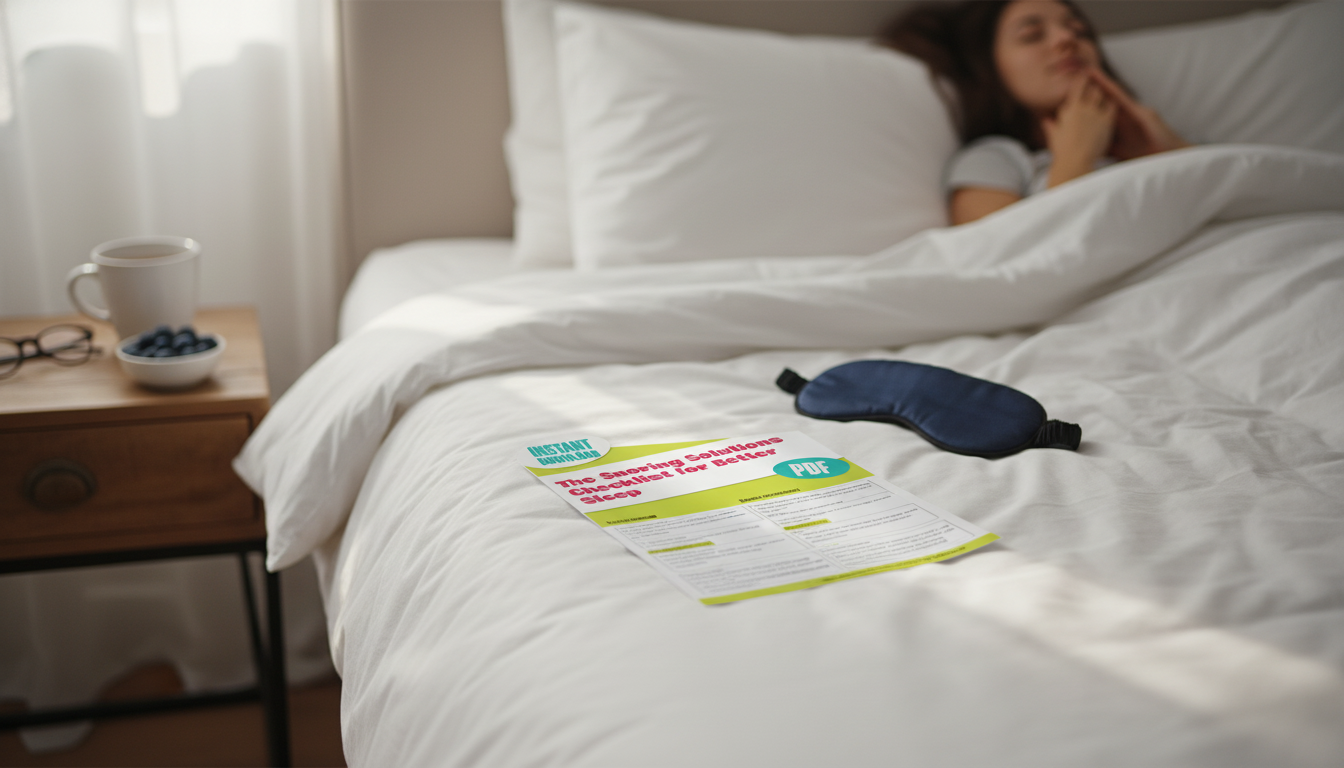
If you want a ready-to-use page that combines a nightly checklist with simple tracking, The Snoring Solutions Checklist for Better Sleep (Printable Download) is designed for step-by-step habit testing and follow-through. It’s an instant digital download, so you can print it and start a 7-night experiment right away.
For extra structure around mood and motivation while you build new sleep habits, Checklist: Bright Mind Boost — Your Simple Daily Guide to Staying Positive can be a helpful companion—especially if frustration or “bad night dread” is building momentum at bedtime.
FAQ
How quickly can snoring improve after making changes?
Many routine changes can show a difference within a few nights, but tracking for 1–2 weeks helps confirm what consistently works rather than relying on a single good night.
What is the simplest first step to try tonight?
Pick one change that’s easy to control—like a side-sleep strategy or avoiding alcohol close to bedtime—and rate the results in the morning using a quick 0–5 scale.
When should snoring be checked by a doctor?
If there are breathing pauses, choking/gasping, significant daytime sleepiness, morning headaches, or high blood pressure, a clinical evaluation for sleep apnea risk is recommended.
Recommended for you



Was this article helpful?
Yes
No









Leave a comment