-
Shop
- Advanced Technologies
- Arts, Crafts & Hobbies
- Bathroom
- Best Sellers
- Car Accessories
- Dating & Social Skills
- Digital Resources
- Beauty
- Electronics & Technology
- Emotional Intelligence
- Home Styling & Organization
- Mindfulness
- Nutrition & Healthy Eating
- Personal Style & Fashion
- Pet Lifestyle & Wellness
- Positive Thinking
- Productivity
- Self Confidence
- Sleep Improvement
- Stress Management & Relaxation
- TikTok Growth & Monetization Mastery
- Travel & Adventure
- Yoga & Mind-Body Practices
- Education & Learning
- Family & Parenting
- Fashion
- Alexander McQueen
- Bags
- Bags & Wallets
- Balenciaga
- Belts
- Blazers
- Bottega Veneta
- Brunello Cucinelli
- Burberry
- Chanel
- Chloé
- Dior
- Dolce & Gabbana
- Dresses
- Etro
- Fendi
- Gucci
- Hats & Hair Accessories
- Jacquemus
- Jewelry
- Jil Sander
- Jimmy Choo
- Kiton
- Luggage
- Miu Miu
- Off-White
- Outerwear
- Prada
- Rick Owens
- Saint Laurent
- Socks & Tights
- Sunglasses
- The Row
- Tom Ford
- Valentino
- Valentino Garavani
- Versace
- Vivienne Westwood
- Watches
- Fashion Accessories
- Furniture
- Gadgets
- Health & Beauty
- Health & Wellness
- Home & Garden
- Home Electronics
- Home Supplies
- Kids & Babies
- Kitchen
- Lighting
- Mindset
- Patio, Lawn & Garden
- Personal Growth
- Pet Care
- Pet Supplies
- Pets
- Shoes
- Sport & Outdoors
- Super Deals
- Travel
- Wealth
- Wealth Building
- Budgeting & Saving
- Cryptocurrency Investing
- Debt Management
- Entrepreneurship & Business Growth
- Family Finance & Budgeting
- Financial Independence
- Financial Mindset & Psychology
- Financial Planning
- Frugal Living & Expense Hacks
- Goal Setting
- High-Income Skills
- Investing Basics
- Leadership
- Motivation
- Networking & Mentorship
- Passive Income Strategies
- Real Estate Investing
- Side Hustles
- Stock Market Investing
- Winter Fashion
- YouTube Shorts Best-Sellers
Wooden Supermarket Shop Playset: Market Stand Role Play
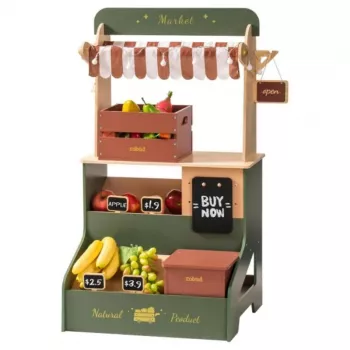
Wooden Toy Shop Playset for Kids – Supermarket Market Stand with Accessories for Role Play
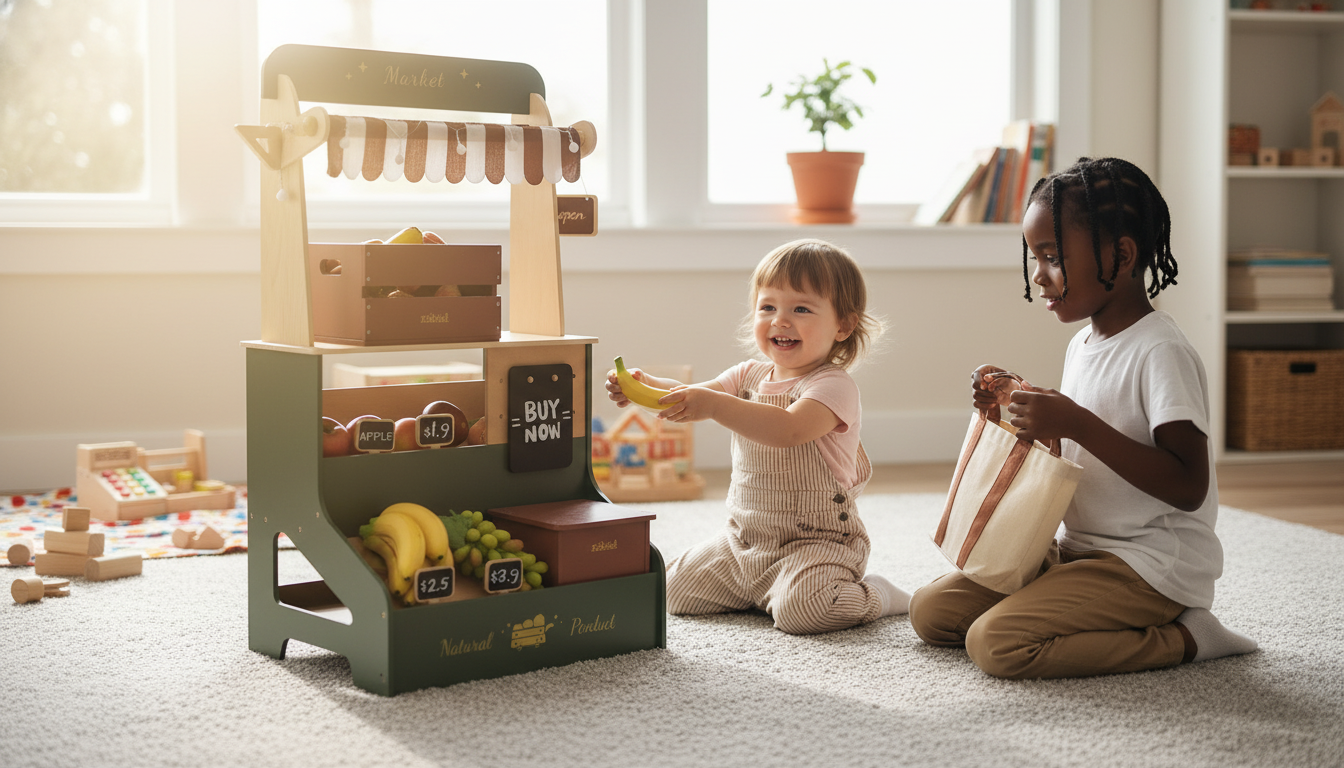
A wooden market stand can turn everyday shopping routines into open-ended pretend play that feels familiar and exciting. With a counter-style setup and realistic accessories, kids get a space to practice conversation, counting, sharing, and problem-solving while they “run” their own store. Whether it’s a quick after-school game or a full weekend “market day,” a sturdy wooden shop playset invites repeat play and grows with your child’s imagination.
What Makes a Toy Market Stand So Engaging
Pretend shopping has a built-in storyline kids already understand, so play starts fast and stays interesting. One minute they’re greeting customers, the next they’re stocking shelves or handling a “special order.”
- Creates a familiar setting kids already understand: picking items, “paying,” bagging, and serving customers
- Encourages cooperative play: taking turns as cashier, shopper, or stocker
- Supports storytelling and language growth through role-based conversation (greetings, questions, polite phrases)
- Builds early math skills naturally: sorting, grouping, counting items, and comparing quantities
- Helps develop independence and confidence by letting kids lead the game rules
Skills Kids Practice During Store Pretend Play
A market stand doesn’t just keep little hands busy—it helps kids rehearse real-world skills in a low-pressure way. Many of these abilities line up with early childhood developmental goals and everyday classroom routines. For a broader view of age-based milestones, you can also reference the CDC developmental milestones.
- Communication: asking for items, explaining choices, and practicing manners
- Social-emotional learning: empathy (serving others), patience (waiting turns), and negotiation (prices, trades)
- Fine motor skills: placing items, organizing shelves, handling small accessories, and pretend scanning
- Executive function: planning what to sell, setting up the “shop,” and following multi-step play routines
- Early literacy: recognizing labels or creating simple “signs” and lists for the shop
Play Ideas and the Skills They Build
| Play scenario | How to do it | Skills supported |
|---|---|---|
| Grocery list challenge | Write or draw 3–5 items to “buy” and find them at the stand | Memory, matching, vocabulary |
| Cashier counting game | Count items and pretend to total the bill with simple numbers | Number sense, sequencing |
| Stock-and-sort | Group accessories by type, color, or category and restock shelves | Classification, organization |
| Customer service role play | Take turns handling a “return” or special request | Problem-solving, empathy |
| Market day storytelling | Create a theme (farmers market, bakery, mini-mart) and act it out | Imagination, narrative skills |
What to Look For in a Wooden Shop Playset
Not all play stands are built the same. A few practical details can make the difference between a toy that’s used daily and one that ends up pushed aside after a week.
- Stable build: a wide base and strong joints help prevent wobbling during active play
- Smooth finishes: sanded edges and kid-friendly surfaces reduce the chance of splinters
- Accessory variety: more item types make role play last longer and feel more realistic
- Room for organization: shelves, bins, or display areas keep play structured and reduce clutter
- Easy cleanup: accessories that store neatly help kids learn responsibility after playtime
Choosing age-appropriate, well-made toys also supports safer play. The American Academy of Pediatrics guidance on selecting toys highlights how open-ended toys can encourage creativity while still fitting a child’s developmental stage.
How to Set It Up for Long-Lasting Play
A thoughtful setup keeps the play area inviting and helps kids stay engaged longer—especially if multiple children are playing together.
Safety and Care Basics for Wooden Toys
Wooden toys are often chosen for durability, but regular checks and smart placement matter. For additional safety reminders, the U.S. Consumer Product Safety Commission toy safety resources are a helpful reference.
Product Spotlight: Wooden Toy Shop Playset for Kids
If you’re looking for a supermarket-style setup that supports cashier play, stocking, and customer role play, Wooden Toy Shop Playset for Kids – Supermarket Market Stand with Accessories for Role Play is designed for exactly that. It suits playrooms and classrooms that want durable pretend-play furniture, and it works well for solo play, siblings, or small-group play dates.
Quick Details
| Item | Details |
|---|---|
| Name | Wooden Toy Shop Playset for Kids – Supermarket Market Stand with Accessories for Role Play |
| Price | 242.85 USD |
| Availability | In stock |
| Product page | View product |
Helpful Add-Ons from the Same Shop
- Creative Rabbit Statue Tray Rack for holding lightweight props or keeping a “checkout counter” area organized.
- New Balance Leather Sneakers for kids who love turning role play into active “errands” around the house.
- Electric Knee Massager with Heat & Vibration – Pain Relief for Knee, Elbow, Shoulder for parents who end up spending a little too long kneeling beside the “shop” during playtime.
FAQ
What age is a wooden market stand playset best for?
Many kids enjoy a shop playset from about ages 3–7, with preschoolers especially loving cashier and counting games. Younger children can still join in with close supervision, particularly if the set includes smaller accessories.
How can accessories be kept from getting lost?
Use a labeled bin or pouch and make a simple cleanup routine part of the game (for example, “restock” before closing the shop). Keeping the stand in a dedicated play area and rotating only a smaller set of pieces at a time also reduces lost items.
Is a wooden shop playset safe for indoor use?
It can be very safe indoors when it’s stable, has smooth edges, and is placed away from stairs or high-traffic areas. Follow the manufacturer’s age guidance, inspect pieces regularly, and supervise younger children when small accessories are in play.
Recommended for you


Was this article helpful?
Yes
No









Leave a comment