-
Shop
- Advanced Technologies
- Arts, Crafts & Hobbies
- Bathroom
- Best Sellers
- Car Accessories
- Dating & Social Skills
- Digital Resources
- Beauty
- Electronics & Technology
- Emotional Intelligence
- Home Styling & Organization
- Mindfulness
- Nutrition & Healthy Eating
- Personal Style & Fashion
- Pet Lifestyle & Wellness
- Positive Thinking
- Productivity
- Self Confidence
- Sleep Improvement
- Stress Management & Relaxation
- TikTok Growth & Monetization Mastery
- Travel & Adventure
- Yoga & Mind-Body Practices
- Education & Learning
- Family & Parenting
- Fashion
- Alexander McQueen
- Bags
- Bags & Wallets
- Balenciaga
- Belts
- Blazers
- Bottega Veneta
- Brunello Cucinelli
- Burberry
- Chanel
- Chloé
- Dior
- Dolce & Gabbana
- Dresses
- Etro
- Fendi
- Gucci
- Hats & Hair Accessories
- Jacquemus
- Jewelry
- Jil Sander
- Jimmy Choo
- Kiton
- Luggage
- Miu Miu
- Off-White
- Outerwear
- Prada
- Rick Owens
- Saint Laurent
- Socks & Tights
- Sunglasses
- The Row
- Tom Ford
- Valentino
- Valentino Garavani
- Versace
- Vivienne Westwood
- Watches
- Fashion Accessories
- Furniture
- Gadgets
- Health & Beauty
- Health & Wellness
- Home & Garden
- Home Electronics
- Home Supplies
- Kids & Babies
- Kitchen
- Lighting
- Mindset
- Patio, Lawn & Garden
- Personal Growth
- Pet Care
- Pet Supplies
- Pets
- Shoes
- Sport & Outdoors
- Super Deals
- Travel
- Wealth
- Wealth Building
- Budgeting & Saving
- Cryptocurrency Investing
- Debt Management
- Entrepreneurship & Business Growth
- Family Finance & Budgeting
- Financial Independence
- Financial Mindset & Psychology
- Financial Planning
- Frugal Living & Expense Hacks
- Goal Setting
- High-Income Skills
- Investing Basics
- Leadership
- Motivation
- Networking & Mentorship
- Passive Income Strategies
- Real Estate Investing
- Side Hustles
- Stock Market Investing
- Winter Fashion
- YouTube Shorts Best-Sellers
Relax Your Body Fast: 5-Min Stress Reset + 7-Day Plan
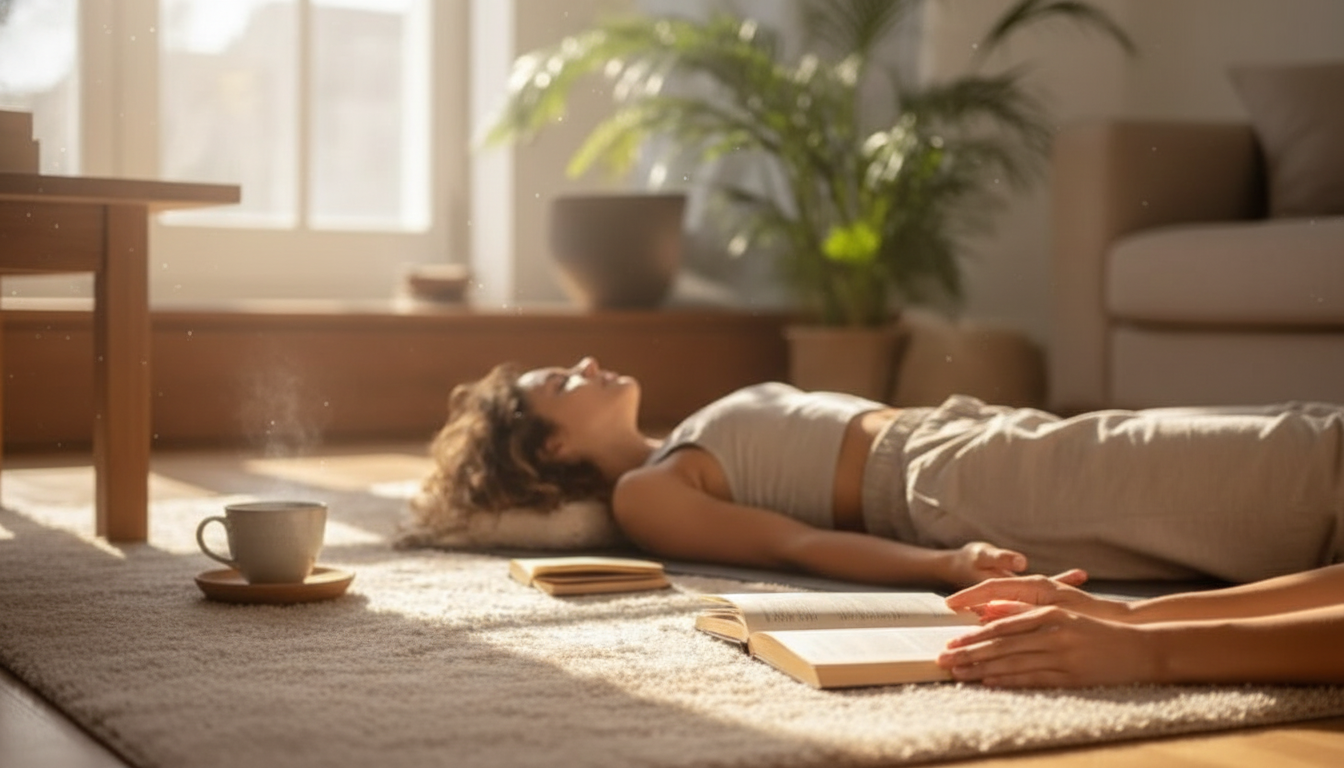
How To Relax Your Body And Live With Less Stress: Simple Daily Practices That Work
Stress often shows up in the body first—tight shoulders, shallow breathing, restless sleep, and a mind that won’t downshift. The goal isn’t to eliminate pressure altogether, but to teach the nervous system how to return to calm more quickly. The practices below focus on fast physical relief, longer-term habits, and a realistic routine that fits busy days.
Know what “body stress” feels like
Stress has a signature. Common physical signs include jaw clenching, neck and shoulder tension, headaches, digestive discomfort, a rapid heartbeat, sweaty palms, and fatigue that doesn’t match your day. Often, the body reacts before the mind fully labels what’s happening.
A helpful way to understand it is the stress cycle: trigger → body activation → coping behavior → recovery (or stuck activation). When recovery doesn’t happen—because you push through, keep scrolling, over-caffeinate, or never fully exhale—your baseline can drift toward “on guard.” Relaxing the body helps the mind because slower breathing and softer muscles can dial down the intensity of anxious thoughts.
Try a quick self-check right now: scan your forehead, jaw, throat, chest, belly, hips, hands, and feet for tension, temperature changes, or a sense of bracing.
Body signals and quick responses
| Body signal | What it may mean | Try this first (1–3 minutes) |
|---|---|---|
| Tight jaw / teeth grinding | Protective tension, often from pressure or worry | Tongue to roof of mouth, relax jaw, slow exhale for 6–8 counts |
| Shoulders up by ears | Fight-or-flight posture | Shoulder roll + long exhale; drop shoulders on exhale |
| Shallow breathing | High alert state | Box breathing: 4 in, 4 hold, 4 out, 4 hold |
| Racing heart | Stress response activated | Paced breathing: ~5–6 breaths/min for 2 minutes |
| Restlessness in legs | Stored activation, need for movement | 30–60 seconds of brisk walking or calf raises |
Reset in under 5 minutes: a quick calm sequence
This short sequence is designed for real life: after a tense email, before a tough conversation, or when your body starts to rev. Keep everything gentle—less effort, more steadiness.
- Step 1 (60 seconds): Breathe out longer than you breathe in (inhale 4, exhale 6–8). A longer exhale nudges the body toward a calmer state.
- Step 2 (60 seconds): Unclench and soften—relax your tongue, loosen your jaw, drop your shoulders, and let your hands uncurl.
- Step 3 (60–90 seconds): Progressive muscle release—tense and release feet → calves → thighs → hands → shoulders. Aim for “firm then melt,” not cramping.
- Step 4 (60 seconds): Grounding—name 5 things you can see, 4 you can feel, 3 you can hear, 2 you can smell, 1 you can taste.
Make it routine: use it after stressful calls, before commuting, or whenever tension spikes. Consistency matters more than intensity.
Breathing and posture: the fastest levers
Breathing is one of the quickest ways to change how stress feels in the body. The target is paced breathing: gentle nasal inhales, a relaxed belly, and a slow, unforced exhale. Avoid gulping air—bigger isn’t better.
Relax your muscles: release the places that hold stress
Some people relax faster with comforting sensory input like gentle heat or low vibration, especially around stiff joints. Keep intensity comfortable and stop if pain increases. For localized stiffness, the Electric Knee Massager with Heat & Vibration – Pain Relief for Knee, Elbow, Shoulder can be an optional support when you want a soothing, hands-free way to unwind.
Build a low-stress day: small habits that compound
- Morning light + a short walk: Light exposure and a brief walk help cue your circadian rhythm and improve mood. Comfortable footwear helps make this routine easier to keep, such as New Balance Leather Sneakers for everyday walking.
- Caffeine strategy: If morning anxiety runs high, delay your first coffee 60–90 minutes and hydrate first.
- Food rhythm: Balanced meals (protein + fiber + healthy fat) reduce energy crashes that can mimic anxiety symptoms.
- Movement snacks: 2–5 minutes of movement a few times daily can be more realistic than one long workout.
- Digital boundaries: Remove non-essential notifications and create a 30-minute no-screen buffer before sleep.
Sleep support: relax the body so the brain follows
Tools that can make relaxation easier (optional supports)
Guided programs can help turn techniques into a repeatable routine, especially if stress feels constant. If you want a structured, step-by-step approach, How To Relax Your Body And Live With Less Stress is a practical option for building daily skills you can use anywhere.
A simple 7-day reset plan
Learn more from trusted sources
For additional evidence-based guidance on stress and relaxation methods, visit the American Psychological Association, the Mayo Clinic’s relaxation techniques overview, and the National Institute of Mental Health.
FAQ
What is the fastest way to relax the body when stress hits?
Use a short sequence: longer exhales, drop shoulders and jaw, a brief tense-and-release round, then a grounding check with your senses. Keep breaths gentle and repeat for 2–5 minutes.
Why does my body stay tense even when nothing is wrong?
Chronic stress can keep your nervous system in a protective high-alert mode even when the moment is safe. Regular recovery cues—sleep, movement, breathing, and boundaries—help retrain your baseline over time.
When should stress symptoms be checked by a professional?
Seek medical or mental health support if you have chest pain, fainting, severe shortness of breath, panic attacks, or persistent sleep disruption, or if symptoms interfere with daily life.
Recommended for you


Was this article helpful?
Yes
No








Leave a comment